| . |  |
. |
| . | |
. |


 by Brooks Hays Washington (UPI) Feb 15, 2019
Acacia ants have an exceptional sense of vibration. As a new study revealed, the ants, which live in and on Africa's acacia trees, can tell the difference between the vibrational patterns made by wind rustling the tree's leaves and those made by a munching herbivore. The ants aren't afraid of being eaten themselves. Instead, the vibrations trigger ants to patrol the branches of the tree and fend off animals looking to eat the tree's leaves and bark. In return for the ants' defensive efforts, the acacia tree provides the insect colonies with nutritious nectar and shelter in the form of hollow thorns. "The vibrations that occur when a mammal plucks a leaf are so powerful that they spread across the whole tree and are perceived by the ants," Felix Hager of Ruhr University Bochum, Germany, said in a news release. "As a result, the ants are alerted within a fraction of a second and promptly orient toward the attacker." Researchers first became interested in the ants defensive response after accidentally bumping into acacia trees while conducting field studies in the East African savannah. "We often inadvertently touched the acacia branches and backed off because of the very fast and disruptive attacks of ants that swarmed on us," researcher Kathrin Krausa said. "It struck us that it was assumed that odors associated with plant damage alert the ants. As biotremologists studying vibrations, we felt that this is only half of the story." To investigate their hunch, researchers studied the vibrations made by a munching goat and gusts of wind and created a machine to replicate the vibrational patterns. When the machine mimicked the vibrations made by the goat, scientists noted a near-immediate increase in the numbers of ants patrolling the tree's trunk and branches. Wind vibrations failed to trigger a change in ant behavior. When the vibrational signature matched those made by herbivores, the ants moved in the direction of the vibrational source, even when the source was far away. "If an ant detects vibrations due to an elephant nibbling at its tree, it needs to find the attacker as soon as possible and decide in which direction to go," Krausa said. "We were impressed by the ants. Spread all over the tree, they made the right decision and walked toward the vibration source to fight back against the attacker almost every time." According to the study's authors, the findings -- published this week in the journal Current Biology -- provide only a glimpse of the importance vibrational sensations play in the lives of ants. "We've just started to understand this mode of communication," Hager said. "There is a lot of work waiting for us!"
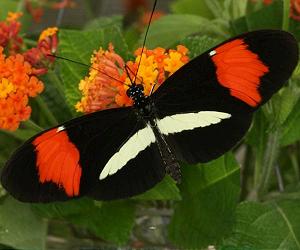
US judge rules against butterfly sanctuary opposed to Trump's wall Washington (AFP) Feb 15, 2019 A US judge ruled Thursday against a butterfly sanctuary that had sued to keep President Donald Trump's proposed border wall from cutting the refuge in two. For months the National Butterfly Center has been arguing that the wall would be devastating for those insects and other creatures living in this habitat in the Rio Grande Valley of Texas. As many as 200 species of butterfly live in the sanctuary, as do bobcats, coyotes, skunk pigs, armadillos and Texas turtles. Financing for a wall goin ... read more
|
|||||||||||||
| The content herein, unless otherwise known to be public domain, are Copyright 1995-2026 - SpaceDaily. All websites are published in Australia and are solely subject to Australian law and governed by Fair Use principals for news reporting and research purposes. By using our websites you consent to cookie based advertising. If you do not agree with this then you must stop using the websites from May 25, 2018. Privacy Statement. Additional information can be found here at About Us. |


 del.icio.us
 Digg
Digg Reddit
 Google







