| . |  |
. |
| . | |
. |


 by Staff Writers Washington (AFP) Feb 6, 2019
NASA announced Wednesday that SpaceX's no-load rocket test has been pushed back to March 2 in Cape Canaveral, Florida. NASA has made SpaceX and Boeing responsible for transporting astronauts starting this year. SpaceX uses its Falcon 9 rocket, at the top of which is fixed a Dragon capsule specially designed to accommodate astronauts. This capsule is meant to take astronauts to the International Space Station. Before launching with humans aboard, however, SpaceX must perform a no-load mission. It was originally set for early January and the date of March 2 is not set in stone. Any technical glitch still could postpone the test. If all goes well, the first manned flight is scheduled for July 2019. At Boeing, the no-load test will not take place until April, with a manned mission starting in August. Founded by Elon Musk, SpaceX makes most of its money from multibillion dollar contracts with NASA and satellite launches. SpaceX in November won authorization from US officials to put nearly 12,000 satellites into orbit in order to boost cheap, wireless internet access by the 2020s. Serial entrepreneur Musk has risen to prominence with a series of ambitious ventures, especially Tesla, which has boosted production of its Model 3 electric car and has continued to enjoy strong demand for the vehicle. Other Musk ventures include OpenAI, Neuralink and the Boring Company, which focuses on infrastructure and tunnels.
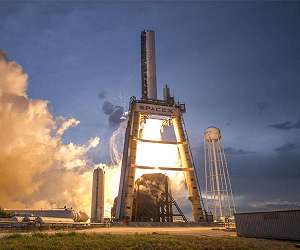
SpaceX successfully test fires Falcon 9 rocket for Dragon 2 Los Angeles (Sputnik) Jan 28, 2019 US aerospace manufacturer SpaceX said on Friday it had carried out a static fire test of the company's Falcon 9 rocket, which in February will conduct an unmanned launch of a Dragon 2 spacecraft. "Static fire test complete - targeting February launch from historic Launch Complex 39A for Crew Dragon's first demonstration flight!" the company said via Twitter. Earlier in the week, a source in a Russian space industry told Sputnik that the unmanned launch of a Dragon 2 spacecraft to the Interna ... read more
|
|||||||||||||
| The content herein, unless otherwise known to be public domain, are Copyright 1995-2026 - SpaceDaily. All websites are published in Australia and are solely subject to Australian law and governed by Fair Use principals for news reporting and research purposes. By using our websites you consent to cookie based advertising. If you do not agree with this then you must stop using the websites from May 25, 2018. Privacy Statement. Additional information can be found here at About Us. |

 del.icio.us
 Digg
Digg Reddit
 Google






