| . |  |
. |
| . | |
. |


 by Brooks Hays Washington (UPI) Jun 13, 2019
The latest audit of Bitcoin's carbon footprint suggests the digital currency is responsible for 22 megatons of CO2 emissions annually. Bitcoin's carbon footprint, according to the new study, is roughly the same size as the carbon footprint of cities like Las Vegas and Hamburg, Germany. Bitcoin is mined by specialized computers. Bitcoin "miners" solve computational problems to link together, or "chain," blocks of transactions. Miners are rewarded for their work, while the process ensures the security of the Bitcoin system. To estimate Bitcoin's carbon footprint, researchers at the Technical University of Munich surveyed a variety of Bitcoin-related data, including the IP addresses of miners and the IPO filings of hardware manufacturers used for mining computers. Bitcoin mining activity has increased rapidly in recent years. In 2018, mining activity quadrupled. Scientists previously attempted to characterize Bitcoin's contribution to global warming, but according to the authors of the latest study, those attempts were undermined by inaccurate approximations. The newest auditing effort, described this week in the journal Joule, is buoyed by more detailed and precise calculations. As the Bitcoin market has expanded, the mining process has become professionalized. Because larger companies have become involved in mining, researchers were able to use data from mandatory IPO filings -- data used to estimate the energy requirements of Bitcoin mining. "In those [professional] operations, extra energy is needed just for the cooling of the data center," researcher Christian Stoll said in a news release. Researchers determined that Bitcoin mining requires 46 terawatt hours of electricity per year. To figure out how much CO2 is emitted to produce those 46 terawatt hours of electricity, researchers looked at where most mining activities occurred. Asia hosts 68 percent of the Bitcoin network's computing operations, while Europe hosts 17 percent. Just 15 percent of Bitcoin mining occurs in North America. Using the geographical distribution breakdown to inform their calculations, researchers determined Bitcoin is responsible for between 22 and 22.9 megatons of CO2 emissions per year. "Naturally there are bigger factors contributing to climate change. However, the carbon footprint is big enough to make it worth discussing the possibility of regulating cryptocurrency mining in regions where power generation is especially carbon-intensive," said Stoll. "To improve the ecological balance, one possibility might be to link more mining farms to additional renewable generating capacity."
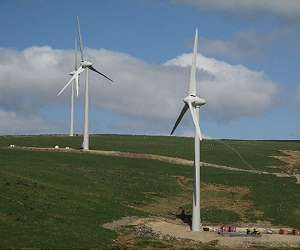
Britain sets deadline for carbon neutrality by 2050 London (AFP) June 12, 2019 The British government on Wednesday presented draft legislation to reduce carbon emissions to net zero by 2050 in what it said would be a first for a major economy. The new target was broadly welcomed across the political spectrum but environmental groups said it would require radical action to decarbonise the entire economy. The deadline is far more ambitious than Britain's current policy of cutting emissions by 80 percent over the same period and Finance Minister Philip Hammond has reportedly ... read more
|
|||||||||||||
| The content herein, unless otherwise known to be public domain, are Copyright 1995-2026 - SpaceDaily. All websites are published in Australia and are solely subject to Australian law and governed by Fair Use principals for news reporting and research purposes. By using our websites you consent to cookie based advertising. If you do not agree with this then you must stop using the websites from May 25, 2018. Privacy Statement. Additional information can be found here at About Us. |


 del.icio.us
 Digg
Digg Reddit
 Google







