| SPACE TRAVEL | MILITARY SPACE | EARTH SCIENCES | SPACE BUSINESS | MARS DAILY |

|
|
|
Nuclear Safety And Space Safety Honolulu HI (SPX) Feb 08, 2005
Admiral Hyman Rickover's nuclear reactor safety culture was never a possible model for the Space Shuttle because of major differences between the two programs. Jim Oberg has written a fine article on why NASA keeps making the same fatal mistakes over and over again in the manned space program. High Voltage Mars  Moffett Field CA (SPX) Feb 08, 2005
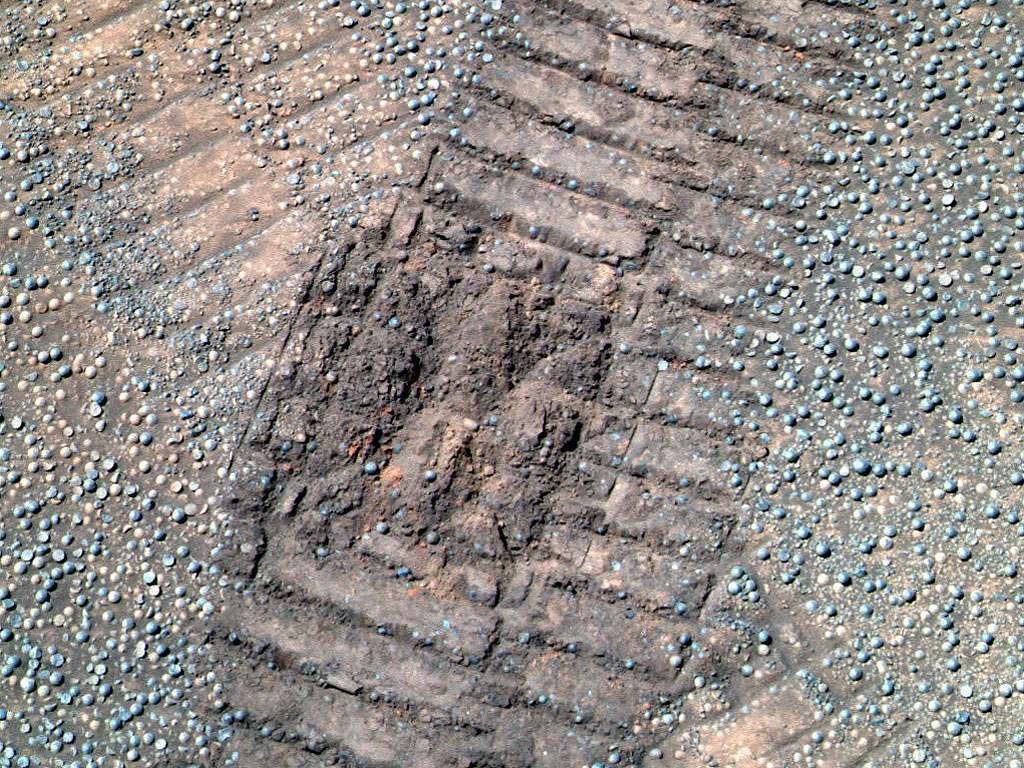
Mars is often enveloped by planet-wide dust storms - their biting winds choke the air and scour the arid surface. Tornado-like dust devils dance across the planet so frequently that their numerous tracks crisscross each other. Radar Observations Refine The Future Motion Of Asteroid 2004 MN4  Puerto Rico (SPX) Feb 07, 2005
Radar observations taken at the Arecibo Observatory in Puerto Rico on January 27, 29, and 30 have significantly improved our estimate for the orbit of asteroid 2004 MN4 and changed the circumstances of the Earth close approach in 2029. |
Sumatra Earthquake Three Times Larger Than Originally Thought Evanston IL (SPX) Feb 08, 2005
Northwestern University seismologists have determined that the Dec 26 Sumatra earthquake that set off a deadly tsunami throughout the Indian Ocean was three times larger than originally thought. Russia Making Satellite For Kazakhstan  Kazakhstan (UPI) Feb 07, 2005
Russia has begun assembling the first Kazakh tele- communications satellite, local media reported Monday. The satellite, called KazSat, will be put into geostationary orbit- at about 22,000 miles above Earth's equator- by the end of the year, the TV report said. Satellite Industry Sees Revival Hopes In Digital Broadcasting  Bangalore, India (AFP) Feb 07, 2005
Digital multimedia broadcasting to hand-held electronic devices may be the hope for satellite service providers in the struggling Asia-Pacific market, an industry official said Monday. |
|
UCR Scientist Chosen As Part Of NASA's Small Explorer Program Riverside CA (SPX) Feb 07, 2005
Astrophysicist Gary Zank is part of a scientific team developing the Interstellar Boundary Explorer, a satellite that will make the first map of the boundary between the Solar System and interstellar space. Light Continues To Echo Three Years After Stellar Outburst 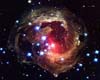 Washington DC (SPX) Feb 07, 2005
The illumination of interstellar dust comes from the red supergiant star at the middle of this image, which gave off a pulse of light three years ago. The dust surrounding V838 Mon may have been ejected from the star during a previous explosion. Experiments Prove Existence Of Atomic Chain 'Anchors' 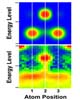 Gaithersburg MD (SPX) Feb 07, 2005
Atoms at the ends of self-assembled atomic chains act like anchors with lower energy levels than the "links" in the chain, according to new measurements by physicists at NIST. |
New Laser Research Could Improve Oil Exploration Success Canberra (SPX) Feb 07, 2005
CSIRO Petroleum and German-based research centre Laser Zentrum Hannover eV (LZH) are collaborating in a project that could save millions of dollars in oil exploration and introduce new Australian geochemical and petroleum analysis techniques to Europe. Intermetallic Mystery Solved With Atomic Resolution Microscope 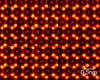 Providence RI (SPX) Feb 07, 2005
Many intermetallics break easily. These compounds are typically stronger than simple metals at high temperatures. Yet they are almost as fragile as ceramics at room temperature. This fragility limits their commercial use. Siberian Fires Most Common Near People 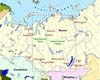 Greenbelt MD (SPX) Feb 07, 2005
While Siberia may be one of the last expanses on Earth where human presence is relatively scarce, scientists are finding some surprising connections between humans and fires in these frigid, northern forests. |
|
| The contents herein, unless otherwise known to be public domain, are Copyright 1995-2005 - SpaceDaily. AFP and UPI Wire Stories are copyright Agence France-Presse and United Press International. ESA Portal Reports are copyright European Space Agency. All NASA sourced material is public domain. Additional copyrights may apply in whole or part to other bona fide parties. Advertising does not imply endorsement, agreement or approval of any opinions, statements or information provided by SpaceDaily on any web page published or hosted by SpaceDaily. Privacy Statement |