| . |  |
. |
| . | |
. |


 by AFP Staff Writers San Francisco (AFP) Aug 24, 2021
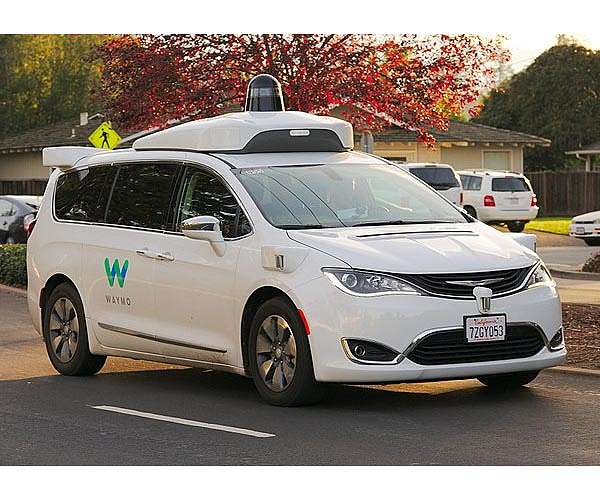
Waymo said Tuesday it would expand its robotaxi service to riders in San Francisco in another step toward fully autonomous ride-hailing. The unit of Google parent Alphabet said it would allow "trusted testers" in San Francisco to hail rides in self-driving cars with an "autonomous specialist" on board for backup. "Our San Francisco Trusted Testers can hail autonomous rides for their everyday needs anywhere they want to go in our initial service area, whether it's their favorite bakery in the Sunset, or a special picnic spot in Golden Gate park," Waymo said in a blog post. "We kicked off this program last week with a select few and are now expanding the program to all interested San Franciscans. We'll begin with an initial group and welcome more riders in the weeks to come." The move expands the Waymo ride-hailing program which has been operating in Phoenix, Arizona since 2017 as rivals work to launch similar operations. The former Google Car unit has been moving ahead of most rivals and has raised billions of dollars in anticipation of a wider launch. The San Francisco project will use the all-electric Jaguar I-PACE vehicles equipped with the fifth-generation Waymo Driver software. "While this is a first for San Francisco, it is a familiar step for Waymo," the blog post said. "Since October 2020, we've served tens of thousands of fully autonomous rides, and through our years of experience, have refined our incremental approach guided by our safety framework and rider feedback." juj-rl/dw
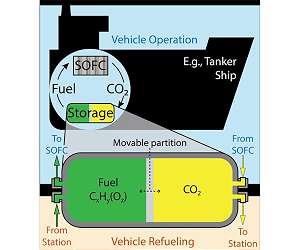
The case for onboard carbon dioxide capture on long-range vehicles Chicago IL (SPX) Aug 19, 2021 When people talk about how to eliminate vehicles' carbon dioxide (CO2) emission, often the conversation often focuses on electrifying cars, trucks and buses. Yet cargo and tanker ships, which are responsible for 3% of all CO2 emissions, are rarely a part of the discussion. Now a Northwestern University research team offers a practical way to make ships CO2 neutral - or even CO2 negative - with CO2-capturing solid oxide fuel cells. After "burning" traditional carbon-based fuels, the fuel cell gener ... read more
|
|||||||||||||
| The content herein, unless otherwise known to be public domain, are Copyright 1995-2026 - SpaceDaily. All websites are published in Australia and are solely subject to Australian law and governed by Fair Use principals for news reporting and research purposes. By using our websites you consent to cookie based advertising. If you do not agree with this then you must stop using the websites from May 25, 2018. Privacy Statement. Additional information can be found here at About Us. |

 del.icio.us
 Digg
Digg Reddit
 Google







