|
 |
 |
 |
 |
 |
 |
 |
 |
 |

| . |  |
. |
Virus May Control Carp The Australian River Rabbit
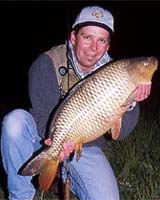
Geelong, Australia (SPX) Sep 11, 2006 Researchers at CSIRO Livestock Industries' Australian Animal Health Laboratory (AAHL) in Geelong - with the Department of Primary Industries Victoria - are investigating Koi herpesvirus as a means of controlling the introduced fish. Project leader Dr Mark Crane says the virus, which first emerged in Israel in 1998, caused mass mortalities in carp in the US, the UK, Israel, the Netherlands, Japan and Indonesia. So far the virus does not appear to have reached Australia. Supported with $355,000 from the newly formed Invasive Animals Cooperative Research Centre and the Murray-Darling Basin Commission, the two-year project will investigate the effectiveness of Koi herpesvirus in controlling strains of carp present in Australia and will examine whether the virus will have any impact on certain native fauna. Dr Crane says while carp are a valuable resource in Asian countries, in Australia the fish is generally viewed as a major pest. "Given their reproductive capacity and their hardiness, carp have been termed the 'rabbit of the river'." Carp were introduced into Australia in the early 1900s as a food and sporting fish. During extensive flooding in the 1970s the fish escaped from farm dams and took over the waterways. They can tolerate a wide range of water temperatures, salinity and pH levels. Carp can also survive and breed in polluted, poorly oxygenated water. "The fish grow to up to 20 kilograms or more in weight and each female can lay up to three million eggs in a single season," Dr Crane says. "In some areas of south-eastern Australia carp make up more than 85 per cent of the fish in the rivers and creeks. "The virus works by attacking the carp's gills as well as other vital organs and eventually killing its host. Koi herpesvirus is attractive as a biological control agent as overseas studies suggest that it has a very limited host range, infecting only carp. "If the laboratory studies show promise, the next step will be extensive government, public and industry consultation to determine the best course of action to control carp, while protecting and restoring Australia's valuable waterways," Dr Crane says. The project is part of a larger pest fish control program under the Invasive Animals CRC and 50-year Native Fish Strategy at the Murray-Darling Basin Commission. Other technologies being developed in the pest fish program include 'daughterless' technology, carp-specific biocides, pheromone and sensory attractants. "It is anticipated that if these technologies are proven to be effective and safe, they will be applied on-ground in an integrated pest fish control program for the Murray-Darling Basin," Dr Crane says. Related Links Australian Animal Health Laboratory
 NASA Study Solves Ocean Plant Mystery
 Greenbelt MD (SPX) Sep 10, 2006
A NASA-sponsored study shows that by using a new technique, scientists can determine what limits the growth of ocean algae, or phytoplankton, and how this affects Earth's climate. Phytoplankton is a microscopic ocean plant and an important part of the ocean food chain. By knowing what limits its growth scientists can better understand how ecosystems respond to climate change. |
|
|

| The content herein, unless otherwise known to be public domain, are Copyright 1995-2006 - SpaceDaily.AFP and UPI Wire Stories are copyright Agence France-Presse and United Press International. ESA PortalReports are copyright European Space Agency. All NASA sourced material is public domain. Additionalcopyrights may apply in whole or part to other bona fide parties. Advertising does not imply endorsement,agreement or approval of any opinions, statements or information provided by SpaceDaily on any Web page published or hosted by SpaceDaily. Privacy Statement |