| . |  |
. |
| . | |
. |


The Plumes Of Enceladus
Pasadena CA (SPX) Jun 13, 2006 Saturn's little moon Enceladus continues to gush icy particles into orbit, making it one of a select group of geologically active bodies in the solar system, scientists at NASA's Jet Propulsion Laboratory said Monday. Enceladus (505 kilometers, or 314 miles across) is seen here against the night side of Saturn. The extended exposure time used to image the plumes also makes the southern hemisphere, illuminated by ring-shine, appear bright. Cassini acquired the image in visible light with its narrow-angle camera on May 4 at a distance of approximately 2.1 million kilometers (1.3 million miles) from Enceladus and 2.3 million kilometers (1.5 million miles) from Saturn. The spacecraft took the image at a phase angle of 159 degrees. Image scale is 13 kilometers (8 miles) per pixel on Enceladus. Related Links Cassini Cassini images JPL
 Collaboration Finds A Rolling Moon
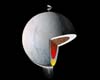 Pasadena CA (SPX) Jun 13, 2006
Bob Pappalardo gets by with a little help from his friends. Pappalardo is a newly hired JPL planetary scientist who credits a collaborative effort with colleagues for a recent unusual discovery based on images from Cassini. |
|
|

| The content herein, unless otherwise known to be public domain, are Copyright 1995-2006 - SpaceDaily.AFP and UPI Wire Stories are copyright Agence France-Presse and United Press International. ESA PortalReports are copyright European Space Agency. All NASA sourced material is public domain. Additionalcopyrights may apply in whole or part to other bona fide parties. Advertising does not imply endorsement,agreement or approval of any opinions, statements or information provided by SpaceDaily on any Web page published or hosted by SpaceDaily. Privacy Statement |