| . |  |
. |
| . | |
. |


 by Brooks Hays Washington (UPI) Jan 9, 2019
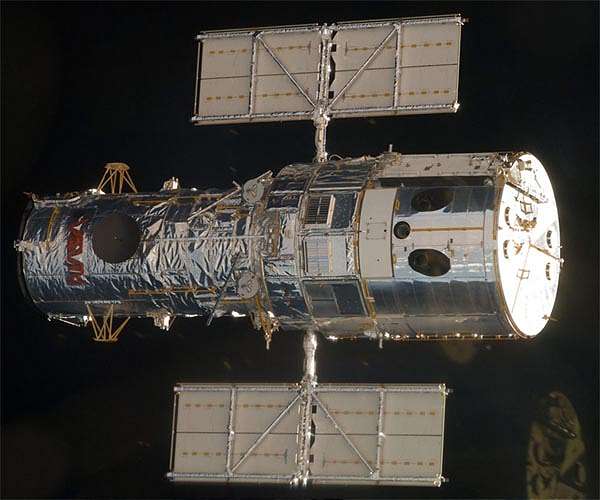
The Hubble Space Telescope's Wide Field Camera 3 has been turned off due to hardware anomalies, according to an update from NASA. "Hubble is still conducting science observations with its other instruments (one camera and two spectrographs) -- more than enough to keep the observatory active for the near future," Cheryl Gundy, deputy news chief at the Space Telescope Science Institute told UPI in an email. There are concerns, however, that "engineers are unlikely to be able to fix the aging telescope until the ongoing U.S. government shutdown ends -- whenever that might be," according to the science journal Nature. Like many of the space telescope's instruments, the Wide Field Camera features a level of electronic redundancy that could allow engineers to recover the instrument, even if the initial problem can't be repaired. However, bringing the the camera back online will require some troubleshooting, an effort that could be complicated by the ongoing government shutdown. "Hubble will continue to perform science observations with its other three active instruments, while the Wide Field Camera 3 anomaly is investigated," NASA reported. Last year, scientists were forced to suspend all Hubble observations after one of gyroscopes, which help orient the telescope, stopped working. Miraculously, engineers remedied the problem by rebooting the system. Hubble has been in space for nearly 30 years and, not surprisingly, has suffered a variety of technical difficulties through the decades. The space shuttle has previously docked five times with the Hubble Space Telescope for in-space repairs. But each time Hubble has faced a setback, the telescope has proved resilient. Still, Hubble is getting old and the end of its lifespan is getting closer. Hubble's successor, the powerful James Webb Space Telescope, is scheduled to be carried to space by an Ariane 5 rocket from French Guiana in 2021.
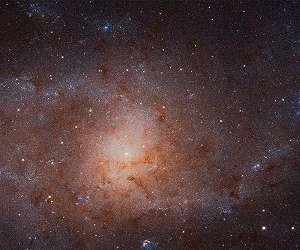
Hubble takes gigantic image of the Triangulum Galaxy Garching, Germany (SPX) Jan 08, 2019 The NASA/ESA Hubble Space Telescope has captured the most detailed image yet of a close neighbour of the Milky Way - the Triangulum Galaxy, a spiral galaxy located at a distance of only three million light-years. This panoramic survey of the third-largest galaxy in our Local Group of galaxies provides a mesmerising view of the 40 billion stars that make up one of the most distant objects visible to the naked eye. This new image of the Triangulum Galaxy - also known as Messier 33 or NGC 598 - ... read more
|
|||||||||||||
| The content herein, unless otherwise known to be public domain, are Copyright 1995-2026 - SpaceDaily. All websites are published in Australia and are solely subject to Australian law and governed by Fair Use principals for news reporting and research purposes. By using our websites you consent to cookie based advertising. If you do not agree with this then you must stop using the websites from May 25, 2018. Privacy Statement. Additional information can be found here at About Us. |

 del.icio.us
 Digg
Digg Reddit
 Google







