| . |  |
. |
| . | |
. |


More Than Monkey See, Monkey Do?
Moffett Field CA (SPX) Jan 12, 2005 Mammals other than humans can distinguish between different speech patterns. Neuroscientists in Barcelona report that rats, like humans (newborn and adult) and Tamarin monkeys, can extract regular patterns in language from speech (prosodic) cues. The report appears in the January issue of the Journal of Experimental Psychology: Animal Behavior Processes, which is published by the American Psychological Association. This study of 16 rats per each of four conditions showed that they were able to pick up enough cues from the rhythm and intonation of human speech to tell spoken Dutch from spoken Japanese. After the researchers trained rats to press a lever when hearing a synthesized five-second sentence in Dutch or Japanese, they tested the rats' response to the alternative language. Rats rewarded for responding to Japanese did not respond to Dutch and vice versa. They pressed the lever only for the language to which they'd been exposed. What's more, the rats generalized the ability to differentiate to new Dutch and new Japanese sentences they had not heard before. This special ability to detect the features that distinguish one type of speech from another - enabled by a test using two very different spoken languages - has now been documented in three different mammalian species: Humans (both newborn and adult), Tamarin monkeys, and now rats. S Scientists study Tamarin monkeys because they can use the same kinds of experiments that they use for infants, allowing for direct comparison. The rats were the first non-primate mammal studied; research on non-mammalian species (such as songbirds) may shed light on whether this ability is unique to mammals. The rats' linguistic sophistication was limited. When experimenters used different humans to speak each sentence, the rats found it much hard to tell the languages apart. Humans, even in early infancy, can overcome this problem - and only get better at it by learning a lexicon and syntax, phonology (letter sounds), word segments, and semantic information (what words mean). Author Juan Toro, who is about to earn his PhD, says the results were surprising. "It was striking to find that rats can track certain information that seems to be so important in language development in humans," he says. The research, he adds, shows "which abilities that humans use for language are shared with other animals, and which are uniquely human. It also suggests what sort of evolutionary precursors language might have." Toro cautions that just because the rats share an ability with humans doesn't mean they use it the same way. He says, "Rats have not evolved the ability to track prosodic cues for linguistic requirements. It is more likely that they do it as a byproduct of other abilities that have some evolutionary relevance for them. The idea that species can use certain structures for a different function than that for which they evolved is not new. For example, human newborns coordinate all the speech information they take in to eventually make sense of language, something that a rat is not likely to do." It is very likely, he and his co-authors suspect, that the ability to tell apart two different languages is a byproduct of more general perceptual abilities used for detecting time order through hearing - a useful adaptation for the rat. Thus, he adds, "rats can co-opt these abilities to differentiate sentences by detecting their prosodic regularities." Related Links SpaceDaily Search SpaceDaily Subscribe To SpaceDaily Express
 Ants Genetic Engineering Leads To Species Interdependency
 Tucson NM (SPX) Jan 11, 2005
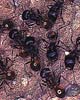
Findings reported last week reveal how an evolutionary innovation involving the sharing of genes between two ant species has given rise to a deep-seated dependency between them for the survival of both species populations. |
|
|

| The content herein, unless otherwise known to be public domain, are Copyright 1995-2006 - SpaceDaily.AFP and UPI Wire Stories are copyright Agence France-Presse and United Press International. ESA PortalReports are copyright European Space Agency. All NASA sourced material is public domain. Additionalcopyrights may apply in whole or part to other bona fide parties. Advertising does not imply endorsement,agreement or approval of any opinions, statements or information provided by SpaceDaily on any Web page published or hosted by SpaceDaily. Privacy Statement |