| . |  |
. |
| . | |
. |


 by Staff Writers Warwick, UK (SPX) Dec 21, 2016
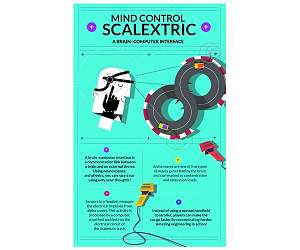
The next generation of toys could be controlled by the power of the mind, thanks to research by the University of Warwick. Led by Professor Christopher James, Director of Warwick Engineering in Biomedicine at the School of Engineering, technology has been developed which allows electronic devices to be activated using electrical impulses from brain waves, by connecting our thoughts to computerised systems. Some of the most popular toys on children's lists to Santa - such as remote-controlled cars and helicopters, toy robots and Scalextric racing sets - could all be controlled via a headset, using 'the power of thought'. This could be based on levels of concentration - thinking of your favourite colour or stroking your dog, for example. Instead of a hand-held controller, a headset is used to create a brain-computer interface - a communication link between the human brain and the computerised device. Sensors in the headset measure the electrical impulses from brain at various different frequencies - each frequency can be somewhat controlled, under special circumstances. This activity is then processed by a computer, amplified and fed into the electrical circuit of the electronic toy. Professor James comments on the future potential for this technology: "Whilst brain-computer interfaces already exist - there are already a few gaming headsets on the market - their functionality has been quite limited. New research is making the headsets now read cleaner and stronger signals than ever before - this means stronger links to the toy, game or action thus making it a very immersive experience. "The exciting bit is what comes next -how long before we start unlocking the front door or answering the phone through brain-computer interfaces?"

Related Links University of Warwick Space Technology News - Applications and Research
|
|||||||||||||
| The content herein, unless otherwise known to be public domain, are Copyright 1995-2026 - SpaceDaily. All websites are published in Australia and are solely subject to Australian law and governed by Fair Use principals for news reporting and research purposes. By using our websites you consent to cookie based advertising. If you do not agree with this then you must stop using the websites from May 25, 2018. Privacy Statement. Additional information can be found here at About Us. |

 del.icio.us
 Digg
Digg Reddit
 Google