| . |  |
. |
| . | |
. |


Maxwell Hardens Powerpc Board For Space And Military Applications
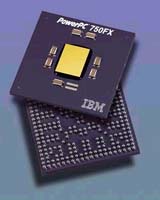
San Diego - Oct 07, 2002 Maxwell Technologies, Inc. has introduced a family of radiation-hardened single board computers (SBC) for the space and military markets that guarantee extremely high reliability in radiation-intense environments while delivering 10 to 1,000 times the usable processing power of currently available space-qualified SBCs. Richard Balanson, Maxwell's president and chief operating officer, said the new Super Computer for Space (SCS) 750 SBC family was unveiled at the ESCCON 2002 trade show in Toulouse, France last week. It incorporates the latest IBM PowerPC 750FX silicon-on-insulator (SOI) processors in a unique triple redundancy configuration, combined with error-corrected and radiation-shielded memory and additional advanced radiation mitigation design methods, to shatter existing performance standards for "rad-hard"-like SBCs using older generation technology. "This is the latest and most significant in a series of newly introduced products based on our strategy of delivering guaranteed performance, guaranteed radiation tolerance and guaranteed life-of-the-application availability," Balanson said. "The SCS750 demonstrates Maxwell's ability to integrate the highest performance components, proprietary technology and innovative designs to address the demanding requirements of the space and military markets." The SCS750 has been engineered to perform complex data processing, digital imaging and broadband transmission functions aboard satellites and military aircraft. According to industry sources, the current market for rad-hard SBCs targeting space and military applications is estimated to be approximately $150 million annually. Balanson noted that, in addition to positioning Maxwell to penetrate this market, the SCS750 provides an opportunity for increased sales of its proprietary Rad-Pak and X-Ray-Pak shielded components, which are integrated into the board. "This new SBC not only dramatically eclipses the processing power of other space-qualified SBCs, but also equals or exceeds the radiation lifetime of the components," Balanson said. "Through a combination of radiation testing and mathematical modeling, we believe that this architecture will provide reliability performance of better than one fault in 300 years." Related Links Maxwell Technologies SpaceDaily Search SpaceDaily Subscribe To SpaceDaily Express
 Boeing-Built NASA Satellite Successfully Reaches Geosynchronous Orbit
 St. Louis - Oct 02, 2002
NASA's Boeing-built Tracking and Data Relay Satellite-I (TDRS-I) has reached GEO orbit where it will provide critical communications support for NASA's space shuttles, the International Space Station, and numerous scientific spacecraft. |
|
|

| The content herein, unless otherwise known to be public domain, are Copyright 1995-2006 - SpaceDaily.AFP and UPI Wire Stories are copyright Agence France-Presse and United Press International. ESA PortalReports are copyright European Space Agency. All NASA sourced material is public domain. Additionalcopyrights may apply in whole or part to other bona fide parties. Advertising does not imply endorsement,agreement or approval of any opinions, statements or information provided by SpaceDaily on any Web page published or hosted by SpaceDaily. Privacy Statement |