| . |  |
. |
| . | |
. |


 by Staff Writers Tokyo (AFP) Feb 17, 2016
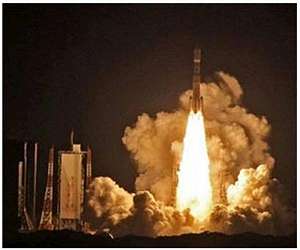
Japan successfully launched a jointly developed space observation satellite on Wednesday tasked with studying mysterious black holes, the country's space agency said. The ASTRO-H satellite, developed in collaboration between the agency, NASA and other groups, is set to orbit at an altitude of about 580 kilometres (360 miles) and observe X-rays emanating mainly from black holes and galaxy clusters. The satellite was carried out by the country's mainstay H-IIA rocket, which soared towards the heavens from the Tanegashima Space Center in southern Japan under mostly clear late afternoon skies. The broadcast was nationally televised and the Japan Aerospace Exploration Agency said the satellite separated from the rocket with no difficulty. Black holes have never been directly observed, but the announcement on the first detection of gravitational waves earlier this month indirectly added to the evidence that black holes do actually exist. The Japanese rocket, which was initially scheduled for liftoff last Friday but was postponed due to bad weather, was launched at 5:45 pm (0845 GMT).
Related Links Understanding Time and Space
|
|||||||||||||
| The content herein, unless otherwise known to be public domain, are Copyright 1995-2026 - SpaceDaily. All websites are published in Australia and are solely subject to Australian law and governed by Fair Use principals for news reporting and research purposes. By using our websites you consent to cookie based advertising. If you do not agree with this then you must stop using the websites from May 25, 2018. Privacy Statement. Additional information can be found here at About Us. |


 del.icio.us
 Digg
Digg Reddit
 Google