| . |  |
. |
| . | |
. |


 by Danielle Haynes Washington DC (UPI) Sep 2, 2021
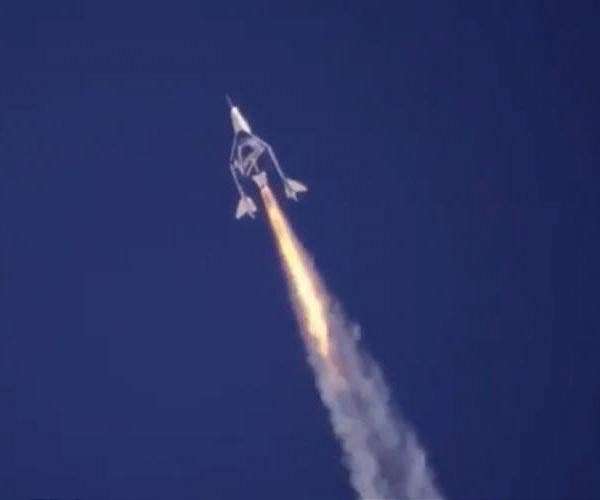
The Federal Aviation Administration on Thursday said it grounded Virgin Galactic amid an investigation of its July launch into space, which went off trajectory. The agency said the VSS Unity, a SpaceShipTwo spacecraft, deviated from its course as it returned to Spaceport America in New Mexico on July 11. "Virgin Galactic may not return the SpaceShipTwo vehicle to flight until the FAA approves the final mishap investigation report or determines the issues related to the mishap do not affect public safety," the FAA said in a statement to UPI. The Virgin Galactic Unity 22 was the first crewed spaceflight by the company amid a so-called "billionaire space race" over the summer, which also included a flight by Jeff Bezos' Blue Origin. Virgin Group CEO was on board the Unity flight, along with three fellow passengers and two pilots. They traveled about 50 miles above Earth before immediately returning to Spaceport America. The New Yorker reported that about 20 miles above Earth, the spacecraft alerted pilots its path was too shallow and the nose wasn't vertical enough to stay on path in descent. Virgin Galactic was working with FAA on its review of the Unity 22 flight, which the company said "dropped below its permitted altitude." "We take this seriously and are currently addressing the causes of the issue and determining how to prevent this from occurring on future missions," a statement from the company said. "Although the flight's ultimate trajectory deviated from our initial plan, it was a controlled and intentional flight path that allowed Unity 22 to successfully reach space and land safely at our Spaceport in New Mexico. "At no time were passengers and crew put in any danger as a result of this change in trajectory, and at no time did the ship travel above any population centers or cause a hazard to the public."
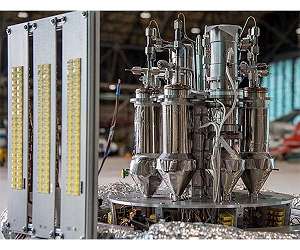
Application of fission-powered spacecraft in solar system exploration missions Beijing, China (SPX) Sep 01, 2021 The universe, and everything it encompasses, has kindled the curious human mind for ages, leading to numerous "eureka" moments in understanding the intricacies of "outer space." Several manned and unmanned space explorations have been successfully deployed to date, using chemical energy and solar energy as the primary sources of energy. However, these sources may not be very energy-efficient or meet the growing demands of our future endeavors. Nuclear or fission energy has revolutionized the suppl ... read more
|
|||||||||||||
| The content herein, unless otherwise known to be public domain, are Copyright 1995-2026 - SpaceDaily. All websites are published in Australia and are solely subject to Australian law and governed by Fair Use principals for news reporting and research purposes. By using our websites you consent to cookie based advertising. If you do not agree with this then you must stop using the websites from May 25, 2018. Privacy Statement. Additional information can be found here at About Us. |

 del.icio.us
 Digg
Digg Reddit
 Google






