| . |  |
. |
| . | |
. |


Crystals On Meteorite Reveal Clues To Early Solar System Evolution
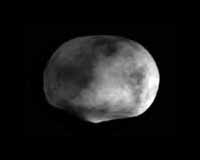
Toronto, Ontario (SPX) Aug 07, 2007 A University of Toronto-led study has uncovered tiny zircon crystals in a meteorite originating from Vesta (a large asteroid between Mars and Jupiter) shedding light on the formation of planetesimals, small astronomical objects that form the basis of planets. To date, studying zircons in eucrites - meteorites formed by volcanic activity - has been difficult due to impact- induced fracturing and their small size, typically less than five microns. Most eucrites are formed within the asteroid belt that orbits Mars and Jupiter, a heap of astronomical debris from the earliest epoch of the solar system. In a study published in the recent issue of Science, researchers collected samples from eucrites found in Antarctica believed to have originated from Vesta. The researchers used new technology to reveal that asteroid's boiling rock turned solid and crystallized within less than 10 million years of solar system formation. "Until now we have not been able to determine this time frame unambiguously," says lead author Professor Gopalan Srinivasan of U of T's Department of Geology. "By pinpointing the timeframe we're able to add one more piece to the geological and historical map of our solar system." Scientists believe that at some point Vesta was quickly heated and then melted into a metallic and silicate core, a similar process that happened on the Earth. The energy for this process was released from the radioactive decay that was present in abundance in the early solar system. What has been unclear is when this process occurred. Equipped with the ion microprobe at the Swedish National Museum, Srinivasan and colleagues from four institutions set to analyze the zircons in the eucrites, which formed when a radioactive element - hafnium-182 - was still alive. Radioactive hafnium-182 decays to another element - tungsten-182 - with a nearly 9 million year half-life span. By studying zircons for their 182 tungsten abundance, the researchers were able to determine the crystallization ages of eucrites occurred within that timeframe. "Zircons on Earth and in space have basically the same characteristics," Srinivasan says. "They occur when boiling rock crystallizes and turns into solid form primary crystallization products or they could be secondary products caused by heating from impacts. We know Vesta became inactive within first 10 million years of solar system formation which is nearly 4.5 billion years ago. This provides a snapshot of the early solar system and clues to the early evolution of Earth's mantle and core." Community Email This Article Comment On This Article Related Links University of Toronto Explore The Early Earth at TerraDaily.com
 Fossils Older Than Dinosaurs Reveal Pattern Of Early Animal Evolution On Earth
 Chicago IL (SPX) Jul 29, 2007
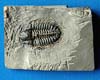
The abundant diversity of characteristics within species likely helped fuel the proliferation and evolution of an odd-looking creature that emerged from an unprecedented explosion of life on Earth more than 500 million years ago. University of Chicago paleontologist Mark Webster reports this finding in the July 27 issue of the journal Science. "From an evolutionary perspective, the more variable a species is, the more raw material natural selection has to operate on," said Webster, an Assistant Professor in Geophysical Sciences at Chicago. |
|
|

| The content herein, unless otherwise known to be public domain, are Copyright 1995-2007 - SpaceDaily.AFP and UPI Wire Stories are copyright Agence France-Presse and United Press International. ESA Portal Reports are copyright European Space Agency. All NASA sourced material is public domain. Additional copyrights may apply in whole or part to other bona fide parties. Advertising does not imply endorsement,agreement or approval of any opinions, statements or information provided by SpaceDaily on any Web page published or hosted by SpaceDaily. Privacy Statement |