| . |  |
. |
| . | |
. |


 by Brooks Hays Washington DC (UPI) Mar 15, 2021
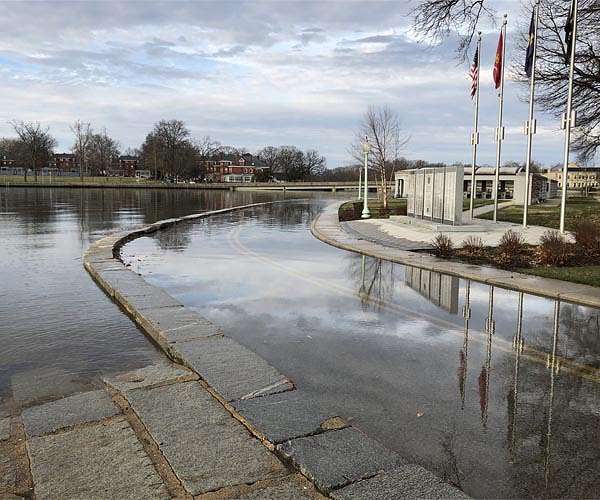
The combination of climate change and urban development is likely to fuel urban flooding in cities across the United States, according to a new model. Previous studies have demonstrated a link between rising ocean and air temperatures and bigger, slower-moving storms -- storms capable of dropping record amounts of rain. Because warmer air can carry more water, many parts of the country are expected to experience increases in precipitation as the climate heats up. For the latest study, published Monday in the journal Environmental Research Letters, scientists looked at how urban development will affect the risk of heavy precipitation and flooding. "When we account for these twin forcing agents of environmental change, the effect of the built environment and the effect of greenhouse gasses, we note a strong tendency toward increased extreme precipitation over future U.S. metropolitan regions," lead study author Matei Georgescu said in a news release. Georgescu is an associate professor in Arizona State University's School of Geographical Sciences and Urban Planning. Previous models have shown urban development frequently boosts a city's heat island index, warming the surrounding air. Warmer air rises faster, causing moisture to condense more quickly. The pattern can yield increases in precipitation downtown, boosting urban precipitation, or push rainstorms downwind of the city. The new models, developed by Georgescu and his colleagues, showed the two climate forcing agents -- greenhouse gas emissions-fueled warming and urban island index-induced precipitation -- have compensating impacts on one another. "This new study is unique," said Georgescu. "We used climate-scale simulations with a regional climate model to examine potential changes in future extreme precipitation resulting from both urban expansion and increases in greenhouse gasses, across dozens of cities across the continental United States." Previously, models showed increases in a city's heat island index can sometimes cause precipitation to decrease across urban environs, as fast-rising air rains out downwind of the city. The latest models showed climate change counteracts the sometimes-diminishing effect of urban development on extreme precipitation. "These are the effects our cities are likely to experience when accounting for the twin forcing agents of urban expansion and greenhouse gas emissions, simultaneously," said Georgescu. "What this means for U.S. cities in the future is the need for a consistent response to an increase in extreme precipitation. We're no longer likely to see a decrease in precipitation as we've seen before," Georgescu said. The models showed the cities of Atlanta, Denver, Phoenix and Houston are especially vulnerable to extreme precipitation and urban flooding. Reducing greenhouse gas emissions must be a priority, the study's authors contend, but urban planners and policy makers must also work to build more prepared, less flood-prone cities. "It's also about how you build cities," Georgescu said. "How extensive they are, how vertical they are, how dense they are, how much vegetation there is, how much waste heat you put into the environment through electricity use, through air conditioning, or through transportation." "All of these things can impact future precipitation in our cities," Georgescu said.
|
|||||||||||||
| The content herein, unless otherwise known to be public domain, are Copyright 1995-2026 - SpaceDaily. All websites are published in Australia and are solely subject to Australian law and governed by Fair Use principals for news reporting and research purposes. By using our websites you consent to cookie based advertising. If you do not agree with this then you must stop using the websites from May 25, 2018. Privacy Statement. Additional information can be found here at About Us. |

 del.icio.us
 Digg
Digg Reddit
 Google







