| . |  |
. |
| . | |
. |


 by Staff Writers Berlin (AFP) Nov 17, 2020
Chinese electric car battery manufacturer Svolt said Tuesday it will plough up to 2 billion euros into establishing a base in Germany, joining a race of Asian firms plugging into Europe's fast-growing e-mobility automotive market. The company, a spin-off of Chinese automotive giant Great Wall Motors, said it was investing the equivalent of $2.3 billion to build two factories in the western state of Saarland by the end of 2023, creating 2,000 jobs. Svolt announced last year that it would be looking for a European production site to strengthen its links with European car manufacturers. The move is intended to target "the European automotive industry and the growing market for renewable energies", according to Svolt chief Yang Hongxin. Saarland was chosen because "it is not only at the heart of Europe, but also represents a region of innovation and technology for the automotive industry," he said. The factories will produce batteries totalling 24 Gigawatt hours (GWh) per year -- enough for 300,000 to 500,000 electric vehicles. With demand for electric cars soaring around the world, Volkswagen alone is expected to need more than 150 GWh a year by 2025. But few European carmakers have taken the huge financial risk of building up in-house production of lithium-ion batteries. Rather, they prefer to farm out the battery work to specialist suppliers. Asian manufacturers in particular have been building up capacity in Europe, with Chinese market leader CATL building a factory in Erfurt that will initially supply BMW. Germany and France are planning an "Airbus of batteries" to take on Asian competitors, with planned investments of between five and six billion euros -- of which four billion is to come from the private sector. fec/hmn/rl
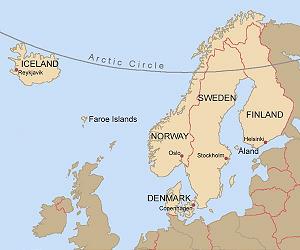
Finland's battery plans spark environmental fears Sotkamo, Finland (AFP) Nov 16, 2020 Lines of trucks carrying piles of rock crisscross Finland's rugged Terrafame mine, which sits 300km (186 miles) below the Arctic Circle and is Europe's largest source of nickel for electric car batteries. At the immense, 60 square kilometre site, the extracted stone is crushed, heaped into vast mounds and fed with oxygen and water through red hoses, allowing the nickel, along with some cobalt, to gradually leach out. "Even today more than 50 percent of our turnover is coming from the electric ve ... read more
|
|||||||||||||
| The content herein, unless otherwise known to be public domain, are Copyright 1995-2026 - SpaceDaily. All websites are published in Australia and are solely subject to Australian law and governed by Fair Use principals for news reporting and research purposes. By using our websites you consent to cookie based advertising. If you do not agree with this then you must stop using the websites from May 25, 2018. Privacy Statement. Additional information can be found here at About Us. |


 del.icio.us
 Digg
Digg Reddit
 Google







