| . |  |
. |
| . | |
. |


 by Brooks Hays Washington (UPI) Jan 30, 2019
An ancient Mongolian skull thought to belong to the a unique species of Pleistocene hominin, dubbed Mongolanthropus, is actually the earliest evidence of modern humans in the region. Using radiocarbon dating and DNA analysis, paleontologists determined the skull belonged to Homo sapiens. The discovery is described in a new paper published Wednesday in the journal Nature Communications. As a result of compromised dating efforts and the fossil's archaic skull features, some researchers previously hypothesized the hominid remains hailed from the mid to late Pleistocene and belonged to Homo erectus or the Neanderthals. The new analysis posits that the modern human specimen lived sometime between 34,950 and 33,900 years ago. Because the skull is contaminated with a variety of materials, radiocarbon dating is difficult. To retrieve an untainted sample, scientists at Oxford University extorted a single amino acid from the collagen inside the skull cap. By radiocarbon dating the amino acid hydroxyproline, researchers were able to precisely narrow the skull's age range. Previous excavations of the Early Upper Palaeolithic have turned up evidence of advanced stone tools in Mongolia. The skull's age correlates neatly with the stone artifacts. Scientists at Oxford collaborated with researchers at the University of Pisa to identify contaminants on the skull. Researchers found traces of resin that were applied when the skull was first discovered. "The research we have conducted shows again the great benefits of developing improved chemical methods for dating prehistoric material that has been contaminated, either in the site after burial, or in the museum or laboratory for conservation purposes," Oxford researcher Thibaut Devièse said in a news release. "Robust sample pretreatment is crucial in order to build reliable chronologies in archaeology." Genetic analysis of DNA extracted from the skull showed the specimen's mitochondrial genome shared wide overlap with the modern human mtDNAs, haplogroup N, found throughout in Eurasia today. "This enigmatic cranium has puzzled researchers for some time," said Oxford researcher Tom Higham. "A combination of cutting edge science, including radiocarbon dating and genetics, has now shown that this is the remain of a modern human, and the results fit perfectly within the archaeological record of Mongolia which link moderns to the Early Upper Palaeolithic industry in this part of the world."
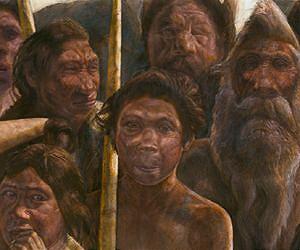
Humans colonized diverse environments in Southeast Asia and Oceania during the Pleistocene Jena, Germany (SPX) Jan 29, 2019 Investigations into what it means to be human have often focused on attempts to uncover the earliest material traces of 'art', 'language', or technological 'complexity'. More recently, however, scholars have begun to argue that more attention should be paid to the ecological uniqueness of our species. A new study, published in Archaeological Research in Asia, reviews the palaeoecological information associated with hominin dispersals into Southeast Asia and Oceania throughout the Pleistocene (1.25 ... read more
|
|||||||||||||
| The content herein, unless otherwise known to be public domain, are Copyright 1995-2026 - SpaceDaily. All websites are published in Australia and are solely subject to Australian law and governed by Fair Use principals for news reporting and research purposes. By using our websites you consent to cookie based advertising. If you do not agree with this then you must stop using the websites from May 25, 2018. Privacy Statement. Additional information can be found here at About Us. |

 del.icio.us
 Digg
Digg Reddit
 Google







