| . |  |
. |
| . | |
. |


Analysis: Iraq-Turkey-U.S. gas talks begin
Washington (UPI) Mar 03, 2008 The third official energy meeting involving Iraqi, Turkish and U.S. officials began Friday in Istanbul, and though a top State Department official doesn't expect "huge breakthroughs," he hopes to see progress in developing a gas pipeline that will eventually feed Europe's demand after edging out Russia and excluding Iran. "The overall goal is to figure out how best to attract investment to stimulate gas production in Iraq, so that there's enough gas for Iraq's domestic consumption and for export," Deputy Assistant Secretary of State for European and Eurasian Affairs Matthew Bryza told United Press International before heading to Turkey. "We would hope that once there's enough gas for Iraq's domestic consumption that there will be a significant quantity that will be exported into Europe up via Turkey into the Nabucco and Turkey-Greece-Italy pipelines." "To transport Iraqi natural gas to international markets is of great strategic importance," said Murat Karagoz, first counselor at the Turkish Embassy in Washington. He told UPI an energy committee of Iraq and its neighbors would meet this weekend in Istanbul as well. Iraq has 111 trillion cubic feet of natural gas reserves -- and much more to be found, experts say -- but such poor infrastructure that it burns off most of the gas produced during oil production. Iraqi citizens lack even half the electricity and fuels they need, and oil and gas workers fear a draft hydrocarbons law will be a gift to international oil companies -- two giant hurdles to overcome to fully tap Iraq's immense natural resources. (It holds at least the world's third-largest oil reserves.) "I have a parochial interest in trying to get as much gas moving toward those pipelines as possible, including from Iraq, where we think there is great promise," Bryza told UPI. "But that's only one of the reasons we're involved in this. We're also involved in this because we want to help Iraq develop its natural resources and meet its own domestic gas demand needs." The projects have been challenged by a lack of guaranteed feed from countries that have massive -- but undeveloped -- gas resources, and competition from Russian-backed projects. "We're trying to develop options to help Europe diversify its supplies of natural gas away from their dependence right now on one company, which is Gazprom," the Russian state firm that serves Europe 25 percent of its consumption, Bryza said. "Our goal is not to be anti-Gazprom. We want to increase competition so Gazprom is a leaner and meaner competitor that operates according to the rules in the market rather than what it is by law, which is a monopoly. "To do that we've got to get gas moving from alternative sources into Europe." While Russia, by far the world's No. 1 holder of natural gas reserves, is stretching its control further into the European energy sector. Iran which is No. 2, just can't make traction. Of course, likely further strengthening of U.N. sanctions doesn't help either, though Tehran hasn't dedicated necessary investment into its infrastructure despite strong prices and growing domestic demand. Iranian gas flow to Turkey has been turned on and off recently. "We don't want to do anything to help Iranian gas move into Europe," Bryza said, "but the reason we're in Iraq working on the gas equation is not directly related to Iran. It's directly related to this broader strategy which is to move new supplies of natural gas, which are not Iranian, into Europe. So we're not proceeding from a desire to isolate Iran. We're proceeding from a much broader strategic perspective." Turkey is already a major transport country for oil and gas moving east to west -- and growing, along with domestic demand. It's hoping a future Arab pipeline will feed it, including gas from Iraq's huge Akkas gas field in western Anbar province, which is proposed to head to Syria first. Several companies, including Shell, Total and Edison, have been courting Baghdad for a deal. Iraq's north is also expected to contain sizeable gas reserves, enough for a pipeline to run alongside twin oil pipelines, which end in a Turkish Mediterranean Sea port. While Iraq and Turkey have been longtime trading partners, a weeklong incursion of Turkish troops hunting Kurdish rebels in northern Iraq's mountains ended Friday but roiled Iraq's central and Kurdish governments. The incursion will "not at all" hurt planning for Iraq's gas, Bryza said, and as of Thursday both Iraqi and Turkish negotiators had arrived in Istanbul for the gas talks. It follows an agreement last August between energy ministers and between U.S. and Turkish presidents in January to collaborate. Bryza said he and Turkish Energy Minister Hilmi Guler are two co-chairs, and Iraq has always sent a senior energy representative, usually a top adviser to Iraqi Prime Minister Nouri al-Maliki. "Also we're going to get (the) pipeline company director general," Bryza said. "He's key because the pipeline company that's actively developing the gas master plan along with Shell for all of Iraq. And you have to have that master plan worked out a bit before you can start figuring out whether there'll be sufficient gas to export." Domestic demand is more than power generation, Bryza said, but also industries like fertilizer and plastics. "Whatever they want to do." He expects to get an update on a draft oil and gas law, frozen in Parliament as Iraq's central government and the Kurdistan Regional Government spar over control of the reserves and the development strategy. The KRG has passed its own oil law and signed dozens of exploration and development deals with small and medium international oil companies, to Baghdad's ire. That's prevented the Kurds from any potential export route, and firms that signed with the KRG have had their Iraq oil shipments cut and blacklisted from future deals in the rest of Iraq. Baghdad is conducting direct talks with a small handful of the world's largest oil companies for deals and readying a bidding round for a larger pool of fields, relying on a Saddam-era law that gave the Oil Ministry such powers. "I'd like to hear where that stands and I'd like to hear the thoughts of the governments of Iraq and Turkey on how to handle all the company interest up in the north now until the hydrocarbon law is in place," Bryza said. "We do not favor the conclusion of formal business deals up in the north until the hydrocarbon law is in place." "I don't anticipate any huge breakthroughs," he added. (e-mail: [email protected]) Community Email This Article Comment On This Article Related Links Powering The World in the 21st Century at Energy-Daily.com
 Analysis: Russia, others eye Iran ties
 Washington (UPI) Mar 03, 2008
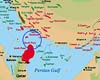
While it has been a cornerstone of U.S. foreign policy since the 1979 Iranian Islamic revolution to contain and isolate Iran, Washington's increasingly factious relations with Moscow and record-high oil prices are beginning to ripple through the relations of the five Caspian nations, producing several developments that all point to the increasing failure of Washington's containment policy against Tehran. The Bush administration's rising hostility against former "Evil Empire" Russia and charter "Axis of Evil" member Iran has infuriated both nations and driven them closer together. |
|
|

| The content herein, unless otherwise known to be public domain, are Copyright 1995-2007 - SpaceDaily.AFP and UPI Wire Stories are copyright Agence France-Presse and United Press International. ESA Portal Reports are copyright European Space Agency. All NASA sourced material is public domain. Additional copyrights may apply in whole or part to other bona fide parties. Advertising does not imply endorsement,agreement or approval of any opinions, statements or information provided by SpaceDaily on any Web page published or hosted by SpaceDaily. Privacy Statement |

