. 24/7 Space News .
EPIDEMICS
Amphibians may carry, spread infectious diseases
by Brooks Hays
Manhattan, Kan. (UPI) Jul 18, 2016


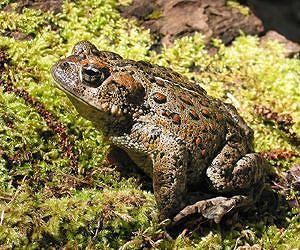
disclaimer: image is for illustration purposes only

New research suggests wild amphibians may play a significant and underappreciated role in hosting and facilitating the spread of infectious diseases.

Scientists say the interferon systems of amphibians -- the protein-signaling systems that govern the immune system and fight disease -- is both unique and largely ignored by the scientific literature.

"Amphibians have a previously unknown complexity within their antimicrobial interferon system, which is highly and differentially responsive to influenza infections," Yongming Sang, research associate professor of anatomy and physiology at Kansas State University, said in a news release. "This suggests the need to study the possible role of wild amphibians as overlooked reservoirs-end hosts for influenza and other zoonotic pathogenic infections."

To get a better idea of the role of amphibians in the spread of disease, researchers subjected frog cells to a variety of influenza A viruses and other zoonotic pathogens. Scientists used viral strains isolated from chickens, horses and pigs.

The viral strains isolated from pigs showed a higher level of infectivity in the frog cells than other isolates, suggesting the relationship between pigs and amphibians may serve as a significant viral vector prior to a strain's jump from animal to human.

"We learned that amphibians as typical insect eaters could also be critical vectors for other arthropod-borne viruses and intracellular bacteria, which are a major health threats in both humans and animals," Sang said. "The coordinated regulation of protective responses mediated by interferon signaling in both vector animals and end hosts may provide an integrated approach to discern critical components of conserved, cross-species innate immune mechanisms."

Sang believes further research into the immune signaling systems of amphibians could reveal ways to combat the spread of infections diseases.

The new research was published this week in the journal Scientific Reports.


Thanks for being here;
We need your help. The SpaceDaily news network continues to grow but revenues have never been harder to maintain.

With the rise of Ad Blockers, and Facebook - our traditional revenue sources via quality network advertising continues to decline. And unlike so many other news sites, we don't have a paywall - with those annoying usernames and passwords.

Our news coverage takes time and effort to publish 365 days a year.

If you find our news sites informative and useful then please consider becoming a regular supporter or for now make a one off contribution.
SpaceDaily Contributor
$5 Billed Once


credit card or paypal
SpaceDaily Monthly Supporter
$5 Billed Monthly


paypal only


.


Related Links
Epidemics on Earth - Bird Flu, HIV/AIDS, Ebola


Comment on this article via your Facebook, Yahoo, AOL, Hotmail login.

Share this article via these popular social media networks
del.icio.usdel.icio.us DiggDigg RedditReddit GoogleGoogle

Previous Report
EPIDEMICS
Quest to end AIDS epidemic at risk: UN
Geneva (AFP) July 12, 2016
Efforts to end the global AIDS pandemic by 2030 are lagging, the UN warned Tuesday, decrying rising numbers of new HIV infections among adults in many regions, with Russia especially hard-hit. In a new report, UNAIDS cautioned that while new HIV infections had fallen dramatically in the past two decades, especially among children, the trend among adults has stalled and even risen in a number ... read more


EPIDEMICS
Russia to spend $60M in 2016-2018 to fund space voyages to Moon, Mars

Russian Moon Base to Hold Up to 12 People

US may approve private venture moon mission: report

Fifty Years of Moon Dust

EPIDEMICS
Mars Canyons Study Adds Clues about Possible Water

Curiosity Mars Rover Enters Precautionary Safe Mode

Mars Canyons Study Adds Clues about Possible Water

Scientists' Innovation Began With 'Wanting to Understand Why'

EPIDEMICS
Mathematical framework prioritizes key patterns to accelerate scientific discovery

Return to light for underground astronauts

A decade of plant biology in space

Exploring inner space for outer space

EPIDEMICS
Dutch Radio Antenna to Depart for Moon on Chinese Mission

Chinese Space Garbageman is not a Weapon

China to launch its largest carrier rocket later this year

China committed to peaceful use of outer space

EPIDEMICS
New Crew Members, Including NASA Biologist, Launch to Space Station

Three astronauts blast off for ISS in upgraded Soyuz craft

Soyuz-FG to launch new crew to ISS fully assembled

Down to Earth: Returned astronaut relishes little things

EPIDEMICS
SpaceX to launch key 'parking spot' to space station

Russia to Continue Rocket Engine Supplies to US Under Existing Contracts

India launches 20 satellites in single mission

LSU Chemistry Experiment Aboard Historic Suborbital Space Flight

EPIDEMICS
Lush Venus? Searing Earth? It could have happened

Graduate researchers lead exoplanet discoveries

Teenagers at Keele University Discover Possible New Exoplanet

A surprising planet with three suns

EPIDEMICS
Setting the gold standard

Winning Students Selected for Future Engineers Star Trek Replicator Challenge

FAU researchers show how gels develop their solid properties

Learning from the mussel, scientists create a biologically active titanium surface


The content herein, unless otherwise known to be public domain, are Copyright 1995-2026 - SpaceDaily. All websites are published in Australia and are solely subject to Australian law and governed by Fair Use principals for news reporting and research purposes. By using our websites you consent to cookie based advertising. If you do not agree with this then you must stop using the websites from May 25, 2018. Privacy Statement. Additional information can be found here at About Us.