| . |  |
. |
| . | |
. |


 by Staff Writers Sao Paulo (AFP) Oct 24, 2019
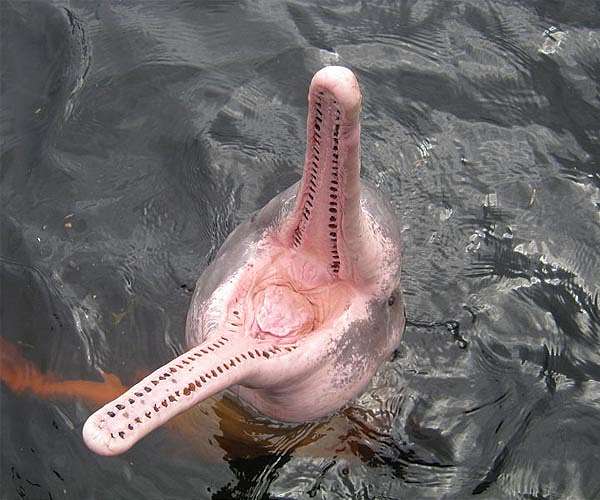
Amazon river dolphins are showing alarming levels of contamination mainly because of illegal panning for gold, conservationists say. Researchers measured contamination levels in 46 of these large freshwater creatures known for long, bottle-like snouts in major basins of Brazil, Bolivia, Colombia and Peru. All of them had some degree of mercury contamination and in more than half the level was high, said Marcelo Oliveira of the Brazilian chapter of the World Wide Fund for Nature, one of several NGOs that carried out the study. It said illegal gold panning, in which mercury is used to separate the precious metal from other minerals, is a real threat, especially in the Orinoco River flowing through Colombia and Venezuela. But gold panning is not the only problem, said Oliveira. "Mercury exists naturally in the Amazon, but is spreading through the water because of deforestation and forest fires and slipping into the food chains of dolphins and fish," said Oliveira. High levels of mercury in river dolphins also pose a serious threat for nearly 20 million people who live in the Amazon region and end up eating contaminated fish. "Mercury can remain in the food chain for up to 100 years. It is a major problem," said Oliveira.

Scientists study scales that protect small Amazonian fish from piranhas Washington (UPI) Oct 16, 2019 In a newly published study, scientists uncovered the secrets of the scales that protect Arapaima gigas, a large Amazonian fish, from the powerful bites of piranhas. Arapaima gigas is one of largest freshwater species in the world, but even the massive air-breather, which must regularly surface for oxygen, is not immune to the jaws of piranhas. That's why the species has, over thousands of years, evolved especially strong scales. When piranhas bite the large fish, its scales bend and dent ... read more
|
|||||||||||||
| The content herein, unless otherwise known to be public domain, are Copyright 1995-2026 - SpaceDaily. All websites are published in Australia and are solely subject to Australian law and governed by Fair Use principals for news reporting and research purposes. By using our websites you consent to cookie based advertising. If you do not agree with this then you must stop using the websites from May 25, 2018. Privacy Statement. Additional information can be found here at About Us. |

 del.icio.us
 Digg
Digg Reddit
 Google







