| . |  |
. |
| . | |
. |


 by Staff Writers Adelaide, Australia (SPX) Mar 19, 2020
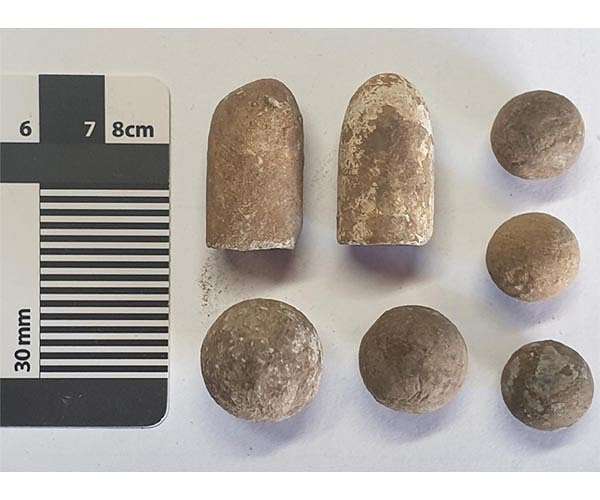
Hundreds of Aboriginal men who became native mounted police in colonial Australia carried a significant burden of responsibility for law and order for white settlers in Queensland and other settlements. A long-running ARC-funded archaeology project has turned the lens on the recruitment to the Queensland Native Mounted Police and their part in the violent 'frontier wars' - which created long-term traumatic impacts on the lives of the Indigenous people involved. "We argue that the massacres, frontier violence, displacement, and the ultimate dispossession of land and destruction of traditional cultural practices resulted in both individual and collective inter-generational trauma for Aboriginal peoples," says Flinders University Professor Heather Burke in a new article published in the Journal of Genocide Research "Despite the Australian frontier wars taking place over a century ago, their impacts continue to reverberate today in a range of different ways, many of which are as yet only partially understood." Professor Burke, and Queensland researchers, say official records show of the history of the Queensland Mounted Police in terms of its development, its white officers, some day-to-day operations of the force, and how many people were killed during the frontier wars. The article looks at the ongoing psychological impacts of the historical dispossession and frontier violence. Based on more than four years of research, the Archaeology of the Queensland Native Mounted Police project combined historical records, oral and historical evidence from a range of sites across central and northern Queensland to understand more fully the activities, lives and legacies of the native police. It strives to present an alternative perspective on the nature of frontier conflict during Australian settlement, in order to initiative new understandings of the Aboriginal and settler experience, and contribute to global studies of Indigenous responses to colonialism. The article 'Betwixt and Between: Trauma, Survival and the Aboriginal Troopers of the Queensland Native Mounted Police' (March, 2020) by Heather Burke, Bryce Barker, Lynley Wallis, Sarah Craig and Michelle Combo has been published in the Journal of Genocide Research (Taylor and Francis Online) DOI: 10.1080/14623528.2020.1735147
Background: This was often accomplished through violence in many forms, leading Australian historian Henry Reynolds to characterise the NMP as "the most violent organisation in Australian history". The project's new publicly available national database covers the 50-year history of the Queensland Native Mounted Police (1849-1904) and stories of many of the 800 troopers and 400 officers. It is the only publicly available historical and archaeological dataset of their lives and activities. The excavations conducted over the past four years were the first archaeological investigations of any native police force operating anywhere in Australia. https://youtu.be/5AIqN_-1Dpk

New Zealand security response to mosque attacks spurs debate Wellington (AFP) March 13, 2020 Armed police patrols and greater surveillance introduced in New Zealand after last year's mosque shootings have ignited debate in the laid-back country about whether the response has gone too far. The mass shootings which killed 51 Muslim worshippers at two mosques in Christchurch on March 15 were carried out by an avowed white supremacist who had slipped under the radar of New Zealand authorities. Police and intelligence officials have pledged to prevent a similar incident happening again, as a ... read more
|
|||||||||||||
| The content herein, unless otherwise known to be public domain, are Copyright 1995-2026 - SpaceDaily. All websites are published in Australia and are solely subject to Australian law and governed by Fair Use principals for news reporting and research purposes. By using our websites you consent to cookie based advertising. If you do not agree with this then you must stop using the websites from May 25, 2018. Privacy Statement. Additional information can be found here at About Us. |

 del.icio.us
 Digg
Digg Reddit
 Google







