| . |  |
. |
| . | |
. |


 by Staff Writers Paris (ESA) Aug 19, 2022
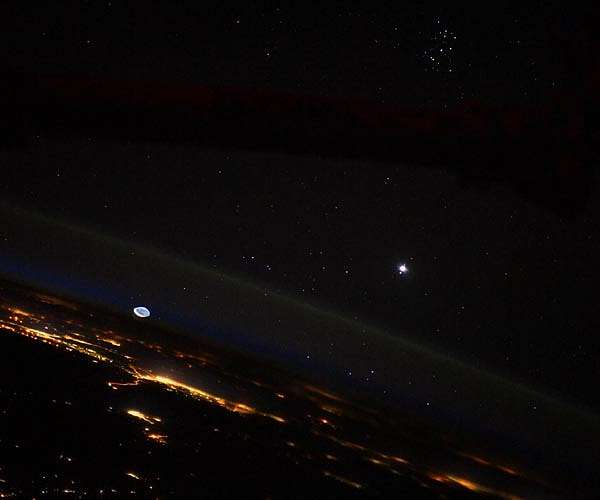
It might be considered cheating, as this picture was taken over two Moons ago, but this Moonrise seen from the International Space Station deserves extra attention - and so, we are submitting this image for NASA's Moon Snap. Taken by ESA astronaut Samantha Cristoforetti from orbit during her Minerva mission, it is a sight rarely seen: Earth's natural satellite appearing over the horizon above the always-distinctive Nile delta at night - taken from 400 km above our planet. The brighter dot in the middle is the planet Venus. The Moon is the only place that has been seen by every human being on our planet, but only around 600 astronauts have seen the Moon from Earth orbit. NASA's Moon snap project is inviting people all over the world to share their Moon art to be featured during the launch coverage of the Artemis I mission, the first human-rated spacecraft to fly to the Moon in over fifty years. This image does not need to be featured on the day of the Artemis launch; ESA's European Service Module will be featured heavily already as the powerhouse that will drive the Orion spacecraft to the Moon and back. Samantha is circling our planet around 400 km above, but Orion will travel over 1250 times farther afield, more than half a million kilometres from its launchpad at NASA's Kennedy Space Center in Florida, USA. Join the celebrations as humankind explores farther and submit your art for NASA Moon snap, and watch the Artemis I launch, the first launch opportunity is on 29 August 2022. Follow Samantha and her Minerva mission for more amazing pictures from space. Submissions can be made here
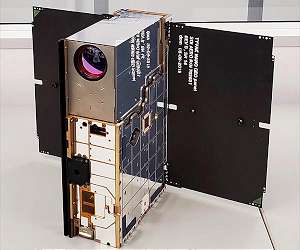
Terran Orbital delivers LunIR to Cape Canaveral for Artemis 1 launch Boca Raton FL (SPX) Aug 19, 2022 Terran Orbital Corporation (NYSE: LLAP) has delivered LunIR to Complex 39B at NASA's Kennedy Space Center. LunIR is a 6U satellite that will fly by the Moon and collect surface thermography as a secondary payload on Artemis 1 - a test mission for NASA's Space Launch System (SLS). Offering more payload mass, volume capability, and energy, SLS, the world's most powerful rocket to date, can carry more payload to deep space than any other vehicle. SLS also houses the Orion capsule - NASA's spacecraft ... read more
|
|||||||||||||
| The content herein, unless otherwise known to be public domain, are Copyright 1995-2026 - SpaceDaily. All websites are published in Australia and are solely subject to Australian law and governed by Fair Use principals for news reporting and research purposes. By using our websites you consent to cookie based advertising. If you do not agree with this then you must stop using the websites from May 25, 2018. Privacy Statement. Additional information can be found here at About Us. |

 del.icio.us
 Digg
Digg Reddit
 Google







