| . |  |
. |
| . | |
. |


 by Staff Writers Kyoto, Japan (SPX) Mar 27, 2019
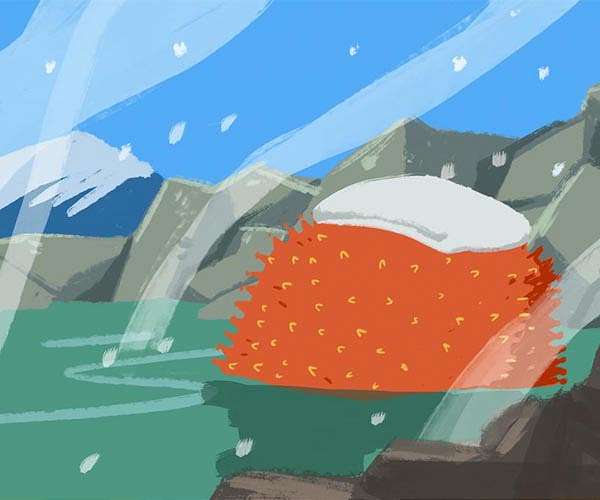
Scientists are constantly discovering new species. A research team consisting of scientists from Kyoto University, Tokyo University of Science, National Institute for Physiological Sciences, and Tokyo Institute of Technology, report in the Journal of Virology the Medusavirus, a unique giant virus that gives pause to current theory on viral evolution. The name Medusavirus was given for the effect this virus has on its host, Acanthamoeba castellanii. Once infected, the amoeba forms cysts, a phenomenon called encystment. This is a typical response to environments hostile to survival, and leaves the amoeba with a hard, protective covering. Perhaps it was not a coincidence then that Medusavirus was found in the hot springs in northern Japan, the first giant virus to have been isolated from a heated environment. Along with the location of its discovery, Medusavirus holds a number of distinguishing features compared with other giant viruses. Its DNA codes for all five types of histones, the key proteins that help compact DNA within the nucleus. In fact, no other known virus has all five types. Further, Medusavirus encoded neither RNA polymerase nor DNA topoimerase II, whereas all other giant viruses encode at least one. These features could explain why the replication of Medusavirus DNA begins and completes in the host nucleus to eventually fill the amoeba nucleus with viral DNA, which again is unlike other giant viruses. Moreover, the morphology of the capsid surface was unique, in that it was covered with an extraordinary number of spherical-headed spikes. In addition, the amoeba genome encoded several capsid surface proteins. The existence of histone genes in Medusavirus and capsid protein genes in amoeba suggest lateral gene transfer going both directions - host-to-virus and virus-to-host. Overall, the findings suggest that Medusavirus offers a new model for host-virus co-evolution and that the Medusavirus is a new family of large DNA viruses.
Research Report: "Medusavirus, a novel large DNA virus discovered from hot spring water"

Paleontologists uncover largest-ever T. rex fossil Washington (UPI) Mar 25, 2019 Paleontologists have discovered the remains of the largest known Tyrannosaurus rex in the world. Found among Late Cretaceous deposits in Saskatchewan's Frenchman River Valley, the giant T. rex, nicknamed Scotty, is the the largest dinosaur fossil recovered from Canada. "This is the rex of rexes," Scott Persons, paleontologist at the University of Alberta, said in a news release. "There is considerable size variability among Tyrannosaurus. Some individuals were lankier than others and som ... read more
|
|||||||||||||
| The content herein, unless otherwise known to be public domain, are Copyright 1995-2026 - SpaceDaily. All websites are published in Australia and are solely subject to Australian law and governed by Fair Use principals for news reporting and research purposes. By using our websites you consent to cookie based advertising. If you do not agree with this then you must stop using the websites from May 25, 2018. Privacy Statement. Additional information can be found here at About Us. |

 del.icio.us
 Digg
Digg Reddit
 Google







