| . |  |
. |
| . | |
. |


 by Stephen Carlson Washington (UPI) Aug 7, 2017
Raytheon has received a $25.9 million contract for modifications and retrofitting of sensors on the Global Hawk Block 30 unmanned aerial vehicle, the Department of Defense announced on Friday. Under the contract engineering work will be done for upgrades to the Enhanced Integrated Sensor Suite and retrofitting of the Enhanced Electro-Optical Receiving Unit on Global Hawks. The work will be performed in El Segundo, Calif., with an expected completion date of Feb. 4, 2019. The Air Force has obligated $16.6 million in 2017 funds upon the contract award. The EISS combines synthetic aperture radar, a high resolution electro-optical digital camera and infrared sensors to scan large areas and produce high definition images for reconnaissance purposes. It can include signals intelligence systems for intercepting and triangulating electronic transmissions as well depending on the mission. The RQ-4 Global Hawk is a large high-altitude unmanned aerial vehicle used for intelligence, surveillance, and reconnaissance operations. It has a wingspan of over 130 feet and has a maximum takeoff weight of 16 tons, making it very large for a UAV. The aircraft has a range over over 12,000 miles and can stay in the air for more than 34 hours, allowing it to provide persistent coverage of large target areas. Block 30 Global Hawks entered service in August 2011, and first saw operational use in Operation Odyssey Dawn over Libya.
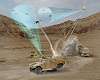 Mobile force protection aims to thwart adversaries' small UAVs and Drones
Washington DC (SPX) Aug 04, 2017 DARPA's Mobile Force Protection (MFP) program focuses on a challenge of increasing concern to the U.S. military: countering the proliferation of small, unmanned aircraft systems (sUASs). These systems-which include fixed- or rotary-wing aircraft and have numerous advantages such as portability, low cost, commercial availability, and easy upgradeability-pose a fast-evolving array of dangers for U ... read more Related Links UAV News - Suppliers and Technology

|
|||||||||||||
| The content herein, unless otherwise known to be public domain, are Copyright 1995-2026 - SpaceDaily. All websites are published in Australia and are solely subject to Australian law and governed by Fair Use principals for news reporting and research purposes. By using our websites you consent to cookie based advertising. If you do not agree with this then you must stop using the websites from May 25, 2018. Privacy Statement. Additional information can be found here at About Us. |


 del.icio.us
 Digg
Digg Reddit
 Google






