| . |  |
. |
| . | |
. |


 by Brooks Hays (UPI) Nov 26, 2019
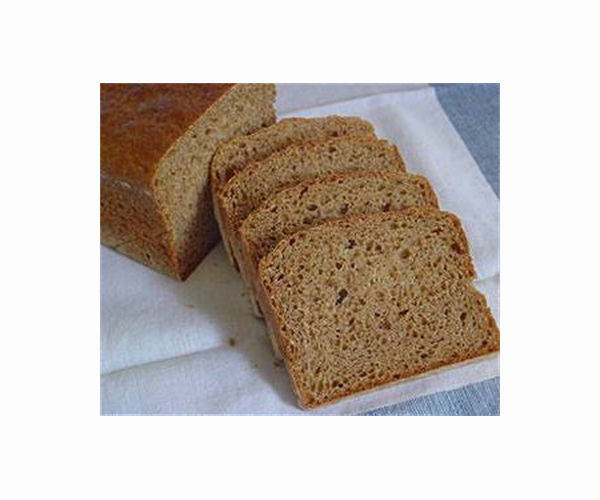
New research suggests the design of industrial bread dough kneaders don't reflect the physics of bread making. High quality bread requires just the right amount of kneading, which works air into the dough. Air develops the dough's gluten network, which provides the bread structure. Too much kneading, however, can curb the dough's ability to absorb water, yielding a dense, tight bread that doesn't rise. Not enough needing and the bread won't be able to retain gas. For the new study, published this week in the journal Physics of Fluids, scientists simulated the local mechanical and microstructural changes that take place during the four stages of the kneading process. To start, scientists had to ensure their kneading model reflected the unique physical properties of bread dough, which combines the characteristics of a viscous liquid and an elastic solid. "Because of its elasticity, dough overcomes gravitational forces during kneading and moves toward the rotating rod, then climbs up it," study co-author Natalie Germann, researcher at the Technical University of Munich in Germany, said in a news release. "If you've ever used a kneader or mixer to make dough in your kitchen, you've probably observed this phenomenon." Using their model of bread dough physics, scientists simulated how air is worked into the dough matrix via different types of industrial kneaders. The simulations revealed the dynamics of gas exchange happening on the dough's surface and interior, and also showed how air pockets form and break up throughout the industrial kneading process. "Previous works considered only the purely viscous properties of the bread dough and restricted their simulations to extremely simplified geometries such as a concentric cylinder setup," said Germann. The model helped scientists understand why bread dough tends to ride up the rod of electric mixers, and also revealed ways engineers might tweak the designs of commercial dough kneaders. "Our computer simulations showed that vertical mixing isn't as good as the radial mixing in the spiral kneader we considered in our work. In the future, mixing performance may be enhanced by using a more highly curved spiral arm or two spiral arms similar to kneading by hand," Germann said.
A remote control for everything small Vienna, Austria (SPX) Nov 20, 2019 They are reminiscent of the "tractor beam" in Star Trek: special light beams can be used to manipulate molecules or small biological particles. Even viruses or cells can be captured or moved. However, these optical tweezers only work with objects in empty space or in transparent liquids. Any disturbing environment would deflect the light waves and destroy the effect. This is a problem, in particular with biological samples because they are usually embedded in a very complex environment. But scient ... read more
|
|||||||||||||
| The content herein, unless otherwise known to be public domain, are Copyright 1995-2026 - SpaceDaily. All websites are published in Australia and are solely subject to Australian law and governed by Fair Use principals for news reporting and research purposes. By using our websites you consent to cookie based advertising. If you do not agree with this then you must stop using the websites from May 25, 2018. Privacy Statement. Additional information can be found here at About Us. |

 del.icio.us
 Digg
Digg Reddit
 Google







