| . |  |
. |
| . | |
. |


 by Staff Writers Corvallis OR (SPX) Jul 18, 2018
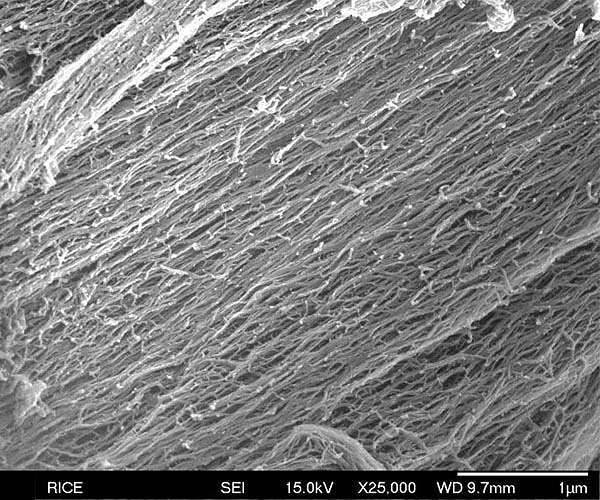
Nanofiber-based wound dressings loaded with vitamin D spur the production of an antimicrobial peptide, a key step forward in the battle against surgical site infections, or SSIs. The findings by Oregon State University researchers and other collaborators, published Wednesday in Nanomedicine, are important because SSIs are the most common healthcare-associated infection and result in widespread human suffering and economic loss. Each year in the U.S. alone, nearly 300,000 surgical patients develop an infection within 30 days of their operation - accounting for an estimated $10 billion in additional healthcare costs - and more than 13,000 of those people die. Researchers used electrospinning to prepare dressings containing the bioactive form of vitamin D: 1,25-dihydroxyvitamin D3, or 1,25(OH)2D3. "Electrospinning is a versatile, simple, cost-effective and reproducible technique for generating long fibers with nanoscale diameters," said Adrian Gombart, co-corresponding author and professor of biochemistry and biophysics in OSU's College of Science. "Electrospun nanofiber wound dressings offer significant advantages over hydrogels or sponges for local drug delivery. They provide several functional and structural advantages, including scar-free healing." The dressings the researchers created proved capable of delivering vitamin D on a sustained basis over four weeks, and they significantly induced production of a peptide, hCAP18/LL37, that kills microbes by disrupting their membranes. "In past research with nanofiber-based sutures we used the inactive form of vitamin D - which is 25-hydroxyvitamin D3 - and a toll-like receptor ligand that was activating cells to convert 25D3 to the bioactive form, 1,25D3," said the other co-corresponding author, Jingwei Xie, assistant professor at the University of Nebraska Medical Center. "Here we bypassed that and went straight to the active form. The dressing just released it and it started turning on the vitamin D target genes, one of which produces the LL37 peptide." Because the dressings work by enhancing innate immune responses rather than by containing conventional, single-target antimicrobial compounds, they are less likely to contribute to drug resistance. The dressings were tested on human skin (collected from plastic surgery patients) in a culture dish, as well as in vitro with keratinocyte and monocyte cell lines, and in vivo in a mouse model. "This study was proof of principle," said co-author Arup Indra, associate professor of pharmacy at OSU. "It looks like we can induce the genes in a model system and now we can start looking at healing and infection." In addition to Indra, Xie and Gombart, a principal investigator at OSU's Linus Pauling Institute, the collaboration also included OSU pharmacy research associate professor Gitali Indra and scientists from the University of California, San Diego, and the VA Nebraska-Western Iowa Health Care System. "Our study suggests that 1,25D3-induced expression of hCAP18 by these nanofiber dressings is a step forward to improving wound healing," Gitali Indra said.
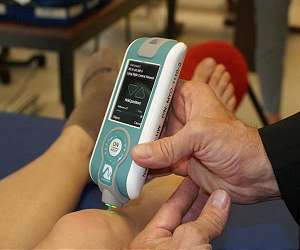
MyotonPRO tests muscle tension and stiffness Paris (ESA) Jul 11, 2018 This gadget looks like a precursor to the devices medical officers use to scan patients in science fiction, and it is not far off. The MyotonPRO tests muscle tension and stiffness. The device is being used on the International Space Station by ESA astronaut Alexander Gerst. Part of the Myotones experiment, Alexander is using the smart-phone-sized device to investigate the human resting muscle tone system. By default, our muscles are always slightly contracted. This is how we maintain posture ... read more
|
|||||||||||||
| The content herein, unless otherwise known to be public domain, are Copyright 1995-2026 - SpaceDaily. All websites are published in Australia and are solely subject to Australian law and governed by Fair Use principals for news reporting and research purposes. By using our websites you consent to cookie based advertising. If you do not agree with this then you must stop using the websites from May 25, 2018. Privacy Statement. Additional information can be found here at About Us. |

 del.icio.us
 Digg
Digg Reddit
 Google







