| . |  |
. |
| . | |
. |


 by Staff Writers Greenbelt MD (SPX) Oct 10, 2016
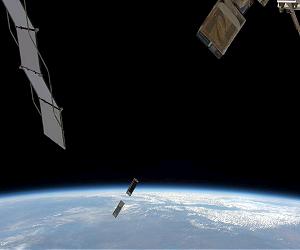
Along with the visible light and warmth constantly emitted by our sun comes a whole spectrum of X-ray and ultraviolet radiation that streams toward Earth. A new CubeSat - a miniature satellite that provides a low-cost platform for missions - is now in space observing a particular class of X-ray light that has rarely been studied. On June 9, 2016, the NASA-funded, bread loaf-sized Miniature X-Ray Solar Spectrometer, or MinXSS, CubeSat began science operations, collecting data on soft X-rays. Watch the video to see a low-intensity solar eruption - a solar flare - from July 21, 2016. The flare imagery was captured by NASA's Solar Dynamics Observatory; the MinXSS data shown on the right shows the soft X-rays observed in near-Earth space by the CubeSat before and during the flare. Each type of solar radiation conveys unique information about the physics underlying solar flares. This data reveals the temperature, density and abundance of solar flare material, all critical factors for determining how flares evolve and heat the sun's atmosphere. Ultimately, solar eruptions impact Earth's upper atmosphere: X-rays from the sun can disturb near-Earth space, interfering with GPS, radio and other communication signals. The class of X-rays that MinXSS observes are particularly important for their influence in the level of the upper atmosphere called the ionosphere. This video shows how dynamic the solar atmosphere can become, and highlights that MinXSS has great sensitivity to observe even the weak flares. These observations exemplify the goals of the six-month mission, which began after the spacecraft was deployed from the International Space Station in May 2016 and has already met its criteria for comprehensive success. The University of Colorado, Boulder, manages MinXSS under the direction of principal investigator Tom Woods.
Related Links MinXSS CubeSat Microsat News and Nanosat News at SpaceMart.com
|
|||||||||||||
| The content herein, unless otherwise known to be public domain, are Copyright 1995-2026 - SpaceDaily. All websites are published in Australia and are solely subject to Australian law and governed by Fair Use principals for news reporting and research purposes. By using our websites you consent to cookie based advertising. If you do not agree with this then you must stop using the websites from May 25, 2018. Privacy Statement. Additional information can be found here at About Us. |


 del.icio.us
 Digg
Digg Reddit
 Google