|
 |
 |
 |
 |
 |
 |
 |
 |
 |

| . |  |
. |
From Ham-Radio To Galileo, Small Satellites Spell Success
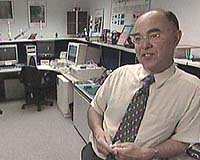
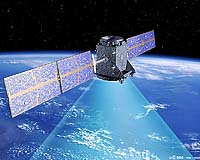
Guilford, England (ESA) Nov 07, 2005 Next month should see the launch of the first Galileo satellite which will be paving the way for Europe's global positioning service. The GSTB-V2A spacecraft has been built by Surrey Satellite Technology (SSTL) in the UK, a company which was created in 1980. Euronews has been to visit the former university students who pioneered the use of small satellites. "My interest in satellites started during the Apollo era in 1969," remembers Professor Martin Sweeting, today Chief Executive Officer of SSTL. "I was watching that just before I went to university." The University of Surrey in Guilford, 50 km from London, was to be the springboard for a spin-off company which now employs 250 people. "In 1985 everybody was building bigger and bigger satellites and we were saying the contrary: smaller and smaller," recalls Sweeting. "People were saying it was an interesting but crazy idea with no future. But over the last 20 years, small satellites have offered a more flexible and economical way of getting to space. Today small satellites are a fashionable activity, and a major part of the space scene." SSTL has been involved in over twenty different projects. Many of the first spacecraft built at Surrey were for amateur radio enthusiasts. But over the years, the company attracted a wide field of users, from Earth observation for countries without the financial resources to have conventional satellites, to specific civilian or military applications on demonstrator missions for major powers. To bring down production costs and to cater for its clients� requirements, SSTL resorted to industrial techniques and materials used in the car industry or in computing � the COTS (Commercial off The Shelf) approach. SSTL's reputation worldwide led to its selection by the European Space Agency to provide one of the two first satellites for the Galileo constellation. "After we developed the 300 kg mini satellites, which was really stretching our capabilities upwards, we realised that we could respond to the ESA call, taking that platform, developing it a bit further and putting on some of the Galileo payload. It would offer a very low cost alternative to the conventional way of doing things."

|