|
 |
 |
 |
 |
 |
 |
 |
 |
 |

| . |  |
. |
World's First Geologic Map Is Displayed
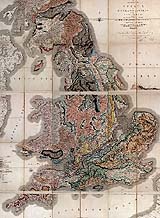
Buffalo NY (UPI) Oct 06, 2005 The world's first geologic map - an 1815, hand-tinted, 10-feet-by-6-feet chart - has gone on display at the Buffalo and Erie County (N.Y.) Public Library. "If geology were a religion, this map would be its bible," said Robert Jacobi, University of Buffalo professor of geology. The map - often called "The Map that Changed the World" - isn't only for geologists, said University of Buffalo planetary volcanologist Tracy Gregg. "This map directly addresses the relationship of people to the natural world. It directly influenced the industrial revolution, geology, biology and evolution. It forced people to think about our place in the universe." The hand-drawn map was created by canal surveyor William Smith in 1815, based on his travels across Great Britain on foot and on horseback. Smith was the first to recognize and record the fact that rocks on the Earth's surface told the stories of the rocks and minerals that exist below the surface. Related Links University of Buffalo SpaceDaily Search SpaceDaily Subscribe To SpaceDaily Express
 A Space Station View On Giant Lightning
 Paris (ESA) Oct 04, 2005
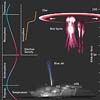
Do giant flashes of lightning striking upwards from thunder clouds merely pose an extraordinarily spectacular view? Or do they actually alter the chemical composition of the atmosphere, playing a role in ozone depletion and the climate on Earth? |
|
|

| The content herein, unless otherwise known to be public domain, are Copyright 1995-2006 - SpaceDaily.AFP and UPI Wire Stories are copyright Agence France-Presse and United Press International. ESA PortalReports are copyright European Space Agency. All NASA sourced material is public domain. Additionalcopyrights may apply in whole or part to other bona fide parties. Advertising does not imply endorsement,agreement or approval of any opinions, statements or information provided by SpaceDaily on any Web page published or hosted by SpaceDaily. Privacy Statement |