| . |  |
. |
| . | |
. |


 by Staff Writers Matsuyama, Japan (SPX) Jul 02, 2019
Primitive chondrites, un-molten stony meteorites, are believed to be the building blocks of the Earth. Because terrestrial planets have experienced chemical differentiation in the core, mantle, and hydrosphere, the elemental abundance pattern of some elements at the planetary surface is not chondritic. In other words, the non-chondritic abundance pattern of elements on the planetary surface is a key to understanding the chemical differentiation processes of terrestrial planets. It has been reported that the ratio of fluorine to chlorine in the silicate Earth (mantle + hydrosphere) is super-chondritic. This indicates an enrichment of fluorine in the silicate Earth compared to chlorine during and/or after the formation of the Earth. However, the processes which produced the super-chondritic F/Cl ratio of the Earth are poorly understood. In order to investigate the origin of the non-chondritic F/Cl ratio of the Earth, the research group of Ehime University and the University of Tokyo experimentally simulated fluorine and chlorine fractionation during magma ocean crystallization using a high-pressure apparatus (Kuwahara et al., 2019). The researchers found that fluorine was moderately compatible with bridgmanite, the most dominant mineral in the Earth's mantle, but chlorine was highly incompatible with mantle minerals, including bridgmanite. This indicates that the crystallized mantle, resulting from a magma ocean, would have been enriched in fluorine, and chlorine may have become concentrated in the planetary surface. After magma ocean crystallization, how was the super-chondritic F/Cl ratio in the silicate Earth established? Kuwahara et al. (2019) have proposed the escape of the hydrosphere during the formation of the Earth. In this scenario, chlorine is selectively lost into space while fluorine is retained in the silicate Earth, elevating the F/Cl ratio. Interestingly, previous studies have also proposed the same scenario to explain the Ar/Xe ratio of the silicate Earth (Shcheka and Keppler, 2012). These results suggest that the earliest atmosphere and, perhaps, ocean of the Earth may not have survived. If this is the case, the current Earth's atmosphere and ocean might both be the second, having their origins in mantle degassing and/or impact delivery of volatiles after the formation of the Earth.
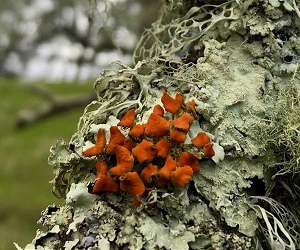
Lichens thrived, diversified after the dinosaurs died out Washington (UPI) Jun 28, 2019 The dinosaurs were the most famous victim of the asteroid that struck Earth some 66 million years ago, but the mass extinction event also killed off a variety of plants and animals. According to a new study, the loss of plant life created space for lichens to diversify and thrive. Lichens are composite organisms formed by symbiotic relationships between algae or cyanobacteria and different fungi species. "We thought that lichens would be affected negatively, but in the three groups we lo ... read more
|
|||||||||||||
| The content herein, unless otherwise known to be public domain, are Copyright 1995-2026 - SpaceDaily. All websites are published in Australia and are solely subject to Australian law and governed by Fair Use principals for news reporting and research purposes. By using our websites you consent to cookie based advertising. If you do not agree with this then you must stop using the websites from May 25, 2018. Privacy Statement. Additional information can be found here at About Us. |

 del.icio.us
 Digg
Digg Reddit
 Google







