| . |  |
. |
| . | |
. |


 by Staff Writers Washington DC (SPX) Mar 21, 2016
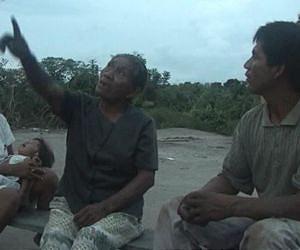
A new scientific study documenting the linguistic practices of the Northwestern Amazonian peoples uncovers an unusual method of communicating the human concept of time. The study, "Modally hybrid grammar? Celestial pointing for time-of-day reference in Nheengatu", by Simeon Floyd of the Max Planck Institute for Psycholinguistics in the Netherlands, was published in the March, 2016 issue of the scholarly journal Language. The article examines how the Nheengatu language includes both auditory and visual components to express the time of day, even though it does not have any numerical or written system for telling time. Speakers of Nheengatu talk about time of day by pointing at where the sun would be in the sky at that particular time. For speakers of Nheengatu, this is the same as saying things like "nine o'clock" in English. This practice is notable because many linguists have assumed that users of auditory languages would not also develop visual language like that seen in sign languages, but this phenomenon shows that this is not necessarily the case. When humans conceive of grammar we might think of categories like nouns, verbs, adjectives and adverbs that people communicate by vocalizing. Research with speakers of Nheengatu reveals that this is not always the case, however, and that in some languages it is possible to communicate some of these concepts, by combining movements of the hands and body with speech in systematic ways. In this case visual elements play a role comparable to that usually played by spoken adverbs, adding information about time to the verbs they occur with. These Nheengatu physical expressions are the type of visual language we expect to see in sign languages, but for spoken languages it is often assumed that all of the words should be audible, not visual, and that the gestures that come along with speech only give extra, peripheral meanings, and not the main information about the topic of talk. These practices seen in small communities in the Amazon have the potential to change how scientists think about the modalities in which language is expressed, because they show that humans don't necessarily have to choose between speaking and signing and are capable of doing both simultaneously. Nheengatu time reference is just one of the types of combinations of spoken and visual language that some linguists are beginning to suspect may be more common than is currently known; since historically many languages have been studied only based on written words and audio recordings, future scientific studies of video recordings may find new and unexpected types combinations of spoken and visual language that may have been previously invisible. A pre-print version of the article may be found here
Related Links Linguistic Society of America Understanding Time and Space
|
|||||||||||||
| The content herein, unless otherwise known to be public domain, are Copyright 1995-2026 - SpaceDaily. All websites are published in Australia and are solely subject to Australian law and governed by Fair Use principals for news reporting and research purposes. By using our websites you consent to cookie based advertising. If you do not agree with this then you must stop using the websites from May 25, 2018. Privacy Statement. Additional information can be found here at About Us. |


 del.icio.us
 Digg
Digg Reddit
 Google