| . |  |
. |
| . | |
. |


Terror Threat Still There
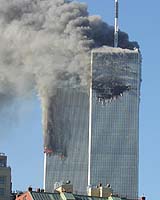
UPI Commentator Arlington VA (UPI) March 05, 2007 Back in the 1960s, before Britney and Ludicris were even born, Frank Zappa was the most outrageous act in American popular music. Zappa delighted in lampooning the complacency of middle-class America, most memorably in his a capella song, "It Can't Happen Here." The message of the song was that the worst nightmares of white suburbia -- anarchy, drugs, interracial dating -- really could happen here. Like Sinclair Lewis' 1935 satirical novel of the same name, the song was a warning that no matter how safe we may think we are, we are not immune to the shocks befalling people in other places. It seems this is a lesson that the American people are in constant danger of forgetting -- even though they all remember Sept. 11, 2001 -- and even though the war in Iraq provides unpleasant surprises for U.S. forces on a weekly basis. Only two months into the new year, Sunni insurgents have (1) used new tactics to down a quarter of all the helicopters lost to hostile fire since the occupation began; (2) stepped up their employment of explosively-formed penetrators that can punch through most armor; and (3) started combining lethal gas with high explosives in their suicide attacks. Each of these developments appears to have caught U.S. commanders and intelligence analysts off guard. So of course the whole American nation will be caught off guard when terrorists again mount an attack within U.S. borders. Even though logic and experience tell us such an attack is coming, emotionally we have been lulled by five years of peace on the home-front into believing it isn't really going to happen. That is why the Bush administration sells its Iraq strategy on the implied guarantee that as long as the American people keep fighting there, they will be safe at home. That is why critics in the Democratic Party feel free to attack the war effort as if there is no connection between what they say and whether terrorists are emboldened by the prospect of American retreat. Both parties, unconsciously, have fallen into the trap of believing that terrorism can be contained "over there." Complacency about the terrorist threat is also a factor in the recent stock-market rise, the real-estate boom in downtown Washington and the lack of concern in political circles over the porosity of the southern border. It may even explain, perversely enough, why the American people don't object to the continuous flow of public commentary on how terrorists could attack public schools, river levees, food courts, chemical plants and subway tunnels. The U.S. public is are too detached from the possibility of those attacks actually happening to worry that such commentaries will give terrorists ideas about which targets are most lucrative. Perhaps complacency is a trait that evolution has preserved because it makes human beings more efficient. Like the human ability to detect strange odors, people can only sustain an energetic awareness of new stimuli such as Sept. 11, 2001 for a brief time before their brains begin to move on to other matters. But here's the rub -- since people do grow so complacent over time, the next big shock after a long lull can elicit a reaction just as powerful as the first time the shock was felt. If there is another Sept. 11, 2001 style attack in America, the stock market, downtown housing prices, foot traffic in food courts and Democratic Party standing in the polls will all collapse overnight. And if you think $600 billion per year is a lot to spend on national defense, hold onto your wallet -- because once the U.S. electorate realizes Sept. 11, 2001 wasn't an anomaly, it will support whatever level of funding is needed to get rid of the threat for good. (Loren B. Thompson is chief executive officer of the Lexington Institute, an Arlington, Va.-based think tank that supports democracy and the free market.)
Source: United Press International Email This Article
Related Links
 Unveiling A High-tech Forensic Video Lab
 Indianapolis IN (SPX) Feb 28, 2007
With law enforcement officers from around the world on hand Feb. 26, the University of Indianapolis and the Law Enforcement and Emergency Services Video Association (LEVA) will open a one-of-a-kind media analysis laboratory, the world's first permanent facility for training criminal investigators in processing and managing large quantities of video evidence. |
|
|

| The content herein, unless otherwise known to be public domain, are Copyright 1995-2006 - SpaceDaily.AFP and UPI Wire Stories are copyright Agence France-Presse and United Press International. ESA PortalReports are copyright European Space Agency. All NASA sourced material is public domain. Additionalcopyrights may apply in whole or part to other bona fide parties. Advertising does not imply endorsement,agreement or approval of any opinions, statements or information provided by SpaceDaily on any Web page published or hosted by SpaceDaily. Privacy Statement |