| . |  |
. |
| . | |
. |


Successful Test Leads Way For Safer Shuttle Solid Rocket Motor
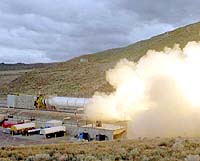
Huntsville AL (SPX) Jun 11, 2004 NASA's Space Shuttle program successfully fired a full-scale Reusable Solid Rocket Motor today, testing modifications that will enhance the safety of the Space Shuttle. A slightly different propellant grain was tested. The new design improves flight safety by decreasing the risk of cracks in the propellant during storage and transportation, according to Jody Singer. Singer is manager of NASA's Reusable Solid Rocket Motor Project, Space Shuttle Propulsion Office, Marshall Space Flight Center, Huntsville, Ala. "Even though the modification is only a slight change from what we have flown on the Shuttle, it still requires a rigorous certification and verification process that includes testing," said Mike Rudolphi, manager of the Space Shuttle Propulsion Office. "NASA has long adhered to the maxim, 'Test what we fly; fly what we test,'" added Rudolphi. "This test is one in a series of tests performed to ensure this modification will perform as we expect," he said. The propellant grain modification is one of 76 test objectives. Twenty-four of the objectives allow the Project Office to reevaluate materials, components and manufacturing processes in use, such as nozzle bondlines, liner-to-housing bondlines, internal insulation, pressure transducers, and solvents. The test will also provide information on a proposed safety enhancement to the motor's nozzle. A new bolted assembly on the nozzle's joint 5 is being tested for strength. The full-scale stationary test was performed at ATK Thiokol Propulsion Division, an Alliant Techsystems Inc., company in Promontory, Utah. ATK Thiokol manufactures the Space Shuttle's Reusable Solid Rocket Motor. Static firings of flight support motors are part of the ongoing verification of components, materials and manufacturing processes required by the Space Shuttle program. Flight support motors are tested annually to evaluate, validate and qualify any proposed improvements or changes to the motor. The two-minute test duration is the same length of time that the motors perform during Space Shuttle flights. The motor is one of the four Shuttle propulsion elements. Data from the test will be analyzed and the results for each objective provided in a final report. The flight support motor's metal case segments and nozzle components will be refurbished for reuse. This is the second test motor firing in less than a year for the Reusable Solid Rocket Motor Office. A five-segment engineering test motor demonstrated in October 2003 pushed the motor to its limits so engineers could validate the safety margins of the four-segment motor used to launch Space Shuttles. At 38.4 meters (126 feet) long and 3.6 meters (12 feet) diameter, the Space Shuttle's Reusable Solid Rocket Motor is the largest solid rocket motor ever flown and the first designed for reuse. The motor has four 30-foot segments filled with propellant. During liftoff, each motor generates an average thrust of 1.2 million kilograms (2.6 million pounds). Related Links Return To Flight SpaceDaily Search SpaceDaily Subscribe To SpaceDaily Express
 Special Blankets Shield The Shuttle From Heat
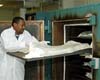 Cape Canveral - May 27, 2004
When we think about blankets, we see them as protection from cold temperatures. But for the Space Shuttle orbiter, blankets mean protection from intense heat. |
|
|

| The content herein, unless otherwise known to be public domain, are Copyright 1995-2006 - SpaceDaily.AFP and UPI Wire Stories are copyright Agence France-Presse and United Press International. ESA PortalReports are copyright European Space Agency. All NASA sourced material is public domain. Additionalcopyrights may apply in whole or part to other bona fide parties. Advertising does not imply endorsement,agreement or approval of any opinions, statements or information provided by SpaceDaily on any Web page published or hosted by SpaceDaily. Privacy Statement |