| . |  |
. |
| . | |
. |


 by Staff Writers Plesetsk, Russia (ESA) Mar 26, 2018
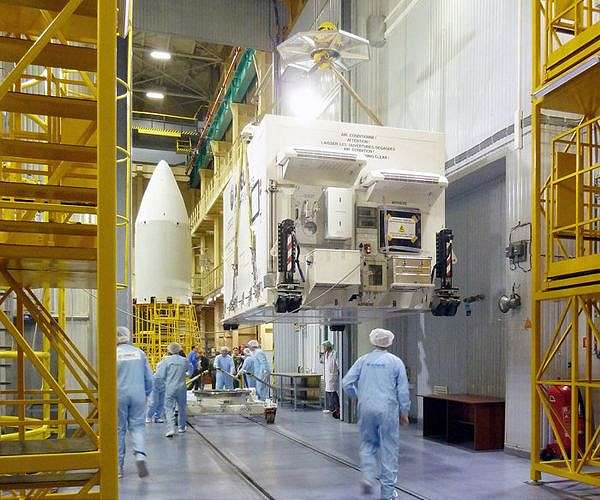
With the Sentinel-3B satellite now at the Plesetsk launch site in Russia and liftoff set for 25 April, engineers are steaming ahead with the task of getting Europe's next Copernicus satellite ready for its journey into orbit. After arriving at the launch site on 18 March, the satellite has been taken out of its transport container and is being set up for testing. Kristof Gantois, ESA's Sentinel-3 engineering manager, said, "The satellite's journey from France was hampered slightly by the freezing winter weather here in Russia, but it's now safe in the milder cleanroom environment. "With the aid of a crane, our baby has been removed from its transport container. We have also been very busy unpacking the array of equipment we need to test the satellite and make it ready to join its Rockot launcher." Sentinel-3B will join its twin, Sentinel-3A, in orbit. The pairing of identical satellites provides the best coverage and data delivery for Europe's Copernicus programme - the largest environmental monitoring programme in the world. The satellites carry the same suite of cutting-edge instruments to measure oceans, land, ice and atmosphere. Feeding a new generation of data products, the Sentinel-3 mission is at the heart of operational oceanography. For example, it provides measurements to monitor aquatic biological productivity and marine pollution, to map sea-level change and to forecast the sea state for efficient and safe ship routeing. As well as measuring the oceans, the mission also delivers unique and timely information about changing land cover, vegetation, urban heat islands, and for tracking wildfires. The Sentinel-3B will be lofted into orbit on a Rockot launcher on 25 April at 17:57 GMT (19:57 CEST).
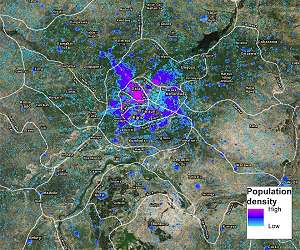
New technologies and computing power to help strengthen population data Southampton UK (SPX) Mar 23, 2018 Research led by the University of Southampton is helping governments in low-income countries strengthen their capacity to build and use population maps, to plan for the future and respond to emergencies. WorldPop at the University, in partnership with non-profit organisation Flowminder Foundation, is forging links with a range of countries around the globe to support the production of detailed population maps and demographic datasets which can aid governments in their efforts to develop fundamenta ... read more
|
|||||||||||||
| The content herein, unless otherwise known to be public domain, are Copyright 1995-2026 - SpaceDaily. All websites are published in Australia and are solely subject to Australian law and governed by Fair Use principals for news reporting and research purposes. By using our websites you consent to cookie based advertising. If you do not agree with this then you must stop using the websites from May 25, 2018. Privacy Statement. Additional information can be found here at About Us. |

 del.icio.us
 Digg
Digg Reddit
 Google







