| . |  |
. |
| . | |
. |


 by Staff Writers Moscow (Sputnik) Jun 11, 2020
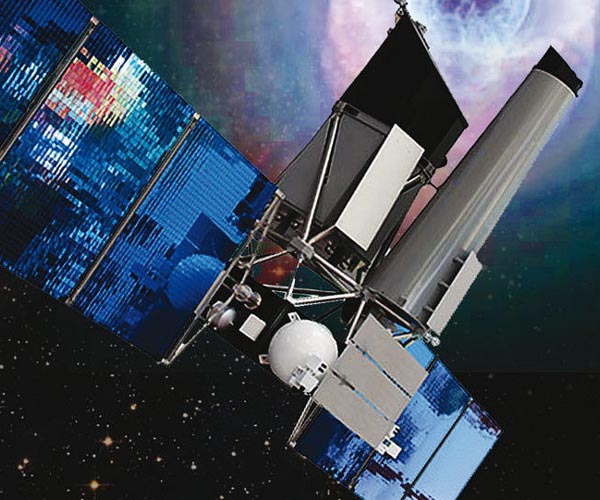
The Russian-German Space Observatory Spektr-RG has completed the first-ever all-sky hard X-ray survey, the Space Research Institute of the Russian Academy of Sciences said. "We have made it - the ART-XC telescope of the Spektr-RG observatory has completed its first all-sky survey! As we have predicted, it took almost a half of the year, during which the telescope was permanently monitoring the sky in hard X-rays", the institute said on Wednesday. The telescope has been scanning the celestial sphere in hard X-rays from 8 December 2019 till 10 June 2020, the institute's news release reads. The observatory has registered all space events in the energy range 4-12 kiloelectron volt (keV). The institute said that the all-sky map with a similar resolution had been created by the German observatory ROSAT in soft X-rays 30 years ago. Other sky hard X-ray maps have a much worse resolution that the map prepared by Spektr-RG. The Spektr-RG mission is a joint project between Roscosmos and the German space agency DLR. Spektr-RG was launched from the Baikonur Cosmodrome in Kazakhstan on 13 July 2019. For the next four years, the telescope is expected to perform eight all-sky surveys to map X-rays sources in the universe with unprecedented detail. X-ray telescopes are used for photographing distant objects of the universe, such as clusters of galaxies, active galactic nuclei, supernova remnants, and x-ray binary stars. The difficulty of observation in the x-ray range is that the telescope must be raised above the atmosphere of the earth, opaque to x-rays. Source: RIA Novosti
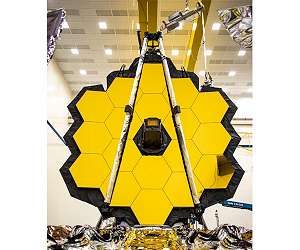
Tower extension test a success for Webb Telescope Greenbelt MD (SPX) Jun 10, 2020 To test the James Webb Space Telescope's readiness for its journey in space, technicians successfully commanded it to deploy and extend a critical part of the observatory known as the Deployable Tower Assembly. The primary purpose of the deployable tower is to create a large gap between the upper part of the observatory that houses its iconic gold mirrors and scientific instruments, and the lower section known as the spacecraft bus which holds its comparatively warm electronics and propulsion syst ... read more
|
|||||||||||||
| The content herein, unless otherwise known to be public domain, are Copyright 1995-2026 - SpaceDaily. All websites are published in Australia and are solely subject to Australian law and governed by Fair Use principals for news reporting and research purposes. By using our websites you consent to cookie based advertising. If you do not agree with this then you must stop using the websites from May 25, 2018. Privacy Statement. Additional information can be found here at About Us. |

 del.icio.us
 Digg
Digg Reddit
 Google







