| . |  |
. |
| . | |
. |


Reflections In The World's Largest Space Mirror
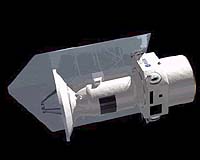
Paris, France (ESA) Sep 26, 2005 Much of our Universe has long remained invisible. Our eyes perceive only a fraction of the electromagnetic spectrum. Seeing at infrared wavelengths, for instance, allows astronomers to explore hidden celestial objects and processes such as the birth of stars. In two years, they will be able to use the most powerful of all infrared space telescopes, Herschel. The latest edition of the Euronews 'Space' magazine recently had the privilege of seeing Herschel's spectacular telescope, a jewel of precision and high technology, with the largest primary mirror ever to be launched into space. The venue was the Intespace satellite test facility in Toulouse, located along the banks of the Canal du Midi which flows through the town. ESA's next-generation infrared observatory, due to be launched in 2007, follows in a grand tradition. In the 1980s, the US-Dutch-British satellite IRAS inaugurated infrared space astronomy by mapping 250 000 cosmic infrared sources and large areas of extended emission. ESA's ISO, launched in 1995, pursued this exploration providing a wealth of science data until May 1998, well beyond its nominal 18-month lifetime. Currently NASA's Spitzer Space Telescope is in operation going further down the ISO track. Software tools developed for Spitzer will be used by Herschel that, in turn, will be pushing back the frontiers of infrared astronomy with its larger telescope and ability to observe at longer wavelengths. While the satellite itself is under the responsibility of Alcatel Space, EADS Astrium in Toulouse is the prime contractor for the telescope, under direct contract to ESA. Over the past weeks, EADS Astrium engineers have been putting the telescope through mechanical qualification tests. These have been conducted in conditions of pristine cleanliness to avoid any risk of the mirror being tainted by condensation, dust particles or molecular contamination. On its support stand, the mirror offered multiple reflections of the engineers working around it. Among them, Yves Toulemont, Herschel Project manager at EADS Astrium, is justifiably proud of the very impressive but remarkably lightweight dish. "By comparison, Hubble has a primary mirror which is 2.4 metres in diameter, and it had a telescope mass of 1500 kilograms. Our telescope with a 3.5 metre mirror is considerably larger, but has a mass of only 320 kilograms." The telescope has required the use of the most advanced technologies. The primary mirror is an assembly of twelve petals, seamlessly joined together. The mirror structure is composed of a ceramic wafer of silicon carbide, which is less than four millimetres thick, but very resistant to the mechanical and thermal stresses encountered during launch and in orbit. It has been polished to a precision of better than three micrometres. The secondary mirror has also been made of silicon carbide and has been polished to a precision better than one micrometre. Both ceramic mirrors are coated with a thin layer of aluminium providing the actual reflective surface. At seven metres long, Herschel will have a launch mass of just over three tonnes. The bulk of the spacecraft consists of a 'cryostat', a giant liquid-helium cooled 'thermos' bottle. In it are placed all the detectors of the three science instruments sitting on top. These are receiving the infrared radiation collected by the mirror and will be kept at a temperature of below minus 271 Celsius. Herschel will be launched by an Ariane 5 in the second half of 2007, together with ESA's Planck satellite that will study cosmic microwave background radiation. The two spacecraft will then separate and Herschel will be positioned to orbit a special point in space, called the L-2 Lagrangian point. "The so-called L-2 Lagrangian point is located 1.5 million kilometres away from Earth in a direction diametrically opposite to the Sun," explains Yves Toulemont. "It is special because the satellite will be in a fixed position, relative to the Sun and Earth." "Both will be in the same area of the sky as seen from Herschel, thus offering an uninterrupted view of the Universe." The observatory will of course never look in the Sun's direction or at any other bright object, to avoid damaging its sensitive detectors. Herschel will be the first space observatory to cover the range from far infrared to sub-millimetre wavelengths. "The telescope will not only allow us to view the invisible Universe through this window, but we will be gather a maximum of infrared radiation, collecting light from newborn galaxies thousands of millions of light-years away," explains Giovanni Bignami, chairman of ESA Space Science Advisory Committee, and also director of France's Centre d'Etude Spatiale des Rayonnements (CESR). "Herschel will be able to search for very special radiation, produced by the vibration of molecules, such as water and those of more complex organic ones. Finding these may not be proof of the existence of life, but at least the presence of its constituents." By delving into the molecular composition of the Universe, tracing back the history of the birth of stars and understanding the formation and evolution of galaxies, astronomers will pursue these investigations begun with IRAS and ISO. The teams building the Herschel observatory and its giant mirror are confident of fulfilling their expectations. EuroNews is a key medium for delivering international information with a European point of view. Broadcast in 79 countries, EuroNews reaches 144 million households in Europe, the Middle East, Africa, Central Asia and North and Latin America via cable, digital satellite and through terrestrial channels. This Space Magazine is produced and broadcast every two weeks, with a new programme starting every second Friday. Each magazine is four minutes long and broadcast 21 times in one week, including evening prime time on Fridays and Saturdays, in order to reach a maximum audience. Related Links Herschel overview SpaceDaily Search SpaceDaily Subscribe To SpaceDaily Express
 APEX Telescope Inaugurated At Chajnantor
 Bonn, Germany (SPX) Sep 26, 2005
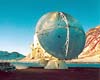
The Atacama Pathfinder Experiment (APEX) project celebrates the inauguration of its new technology 12-m telescope, located on the 5100 m high Chajnantor plateau in the Atacama Desert (Chile).
--------------------------------------------------------- It's new. And it's downright terrific! Celestron's CPC Schmidt-Cassegrain telescope is the scope you've been waiting for! It offers new alignment technology, advanced engineering, and bold new design at a new, low price! In fact, Celestron's Professional Computerized (CPC) scope with revolutionary SkyAlign Alignment Technology redefines everything that amateur astronomers are looking for. It offers quick and simple alignment, GPS technology, unsurpassed optical quality, ease of use, advanced ergonomics, enhanced computerization and, most important, affordability. Want to view M-31 tonight? One button takes you there!
Shop for telescopes online at Telescopes.com! today!
|
|
|

| The content herein, unless otherwise known to be public domain, are Copyright 1995-2006 - SpaceDaily.AFP and UPI Wire Stories are copyright Agence France-Presse and United Press International. ESA PortalReports are copyright European Space Agency. All NASA sourced material is public domain. Additionalcopyrights may apply in whole or part to other bona fide parties. Advertising does not imply endorsement,agreement or approval of any opinions, statements or information provided by SpaceDaily on any Web page published or hosted by SpaceDaily. Privacy Statement |