


Subscribe free to our newsletters via your
. 24/7 Space News .


EARLY EARTH
Phosphorus Identified As The Missing Link In Evolution Of Animals
by Staff Writers
Edmonton, Canada (SPX) Nov 04, 2010


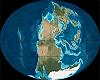
Phosphorus is an essential nutrient that promoted the growth of cyanobacteria.

A University of Alberta geomicrobiologist and his PhD student are part of a research team that has identified phosphorus as the mystery ingredient that pushed oxygen levels in the oceans high enough to establish the first animals on Earth 750 million years ago.

By examining ancient-ocean sediments, Kurt Konhauser, student Stefan Lalonde and other colleagues discovered that as the last glacier to encircle Earth receded, leaving behind glacial debris containing phosphorus that washed into the oceans.

Phosphorus is an essential nutrient that promoted the growth of cyanobacteria, or blue-green-algae, and its metabolic byproduct is oxygen. The new, higher oxygen levels in the ocean reached a threshold favourable for animals to evolve.

Konhauser's past research into ancient phosphorus levels in a unique suite of rocks called banded iron formations led him and his colleagues at the University of California Riverside to their current findings.

In 2007, Konhauser and his U of A team published research in the magazine Science that was contrary to the then-accepted theory that phosphorus was scarce throughout much of Earth's history, it was in fact plentiful.

"Now in 2010 we showed that phosphorus levels actually peaked between 750 and 635 million years ago at the very same time that oxygen levels increased, allowing complex life forms to emerge," says Lalonde. "That establishes our link between phosphorus and the evolution of animals."

Konhauser and Lalonde were co-authors on the paper published Oct. 27 in Nature.

.


Related Links
University of Alberta
Explore The Early Earth at TerraDaily.com


Comment on this article via your Facebook, Yahoo, AOL, Hotmail login.

Share this article via these popular social media networks
del.icio.usdel.icio.us DiggDigg RedditReddit GoogleGoogle


EARLY EARTH
Cincinnati's Algeo Tracks Evidence Of The Great Dying
Cincinnati OH (SPX) Nov 03, 2010
More than 251 million years ago, at the end of the Permian period, Earth almost became a lifeless planet. Around 90 percent of all living species disappeared then, in what scientists have called "The Great Dying." Thomas J. Algeo, has spent much of the past decade investigating the chemical evidence buried in rocks formed during this major extinction. The University of Cincinnati professor ... read more


EARLY EARTH
New type of moon rock identified

Moon Express Enters $30 Million Google Lunar X PRIZE Competition

Dead Spacecraft Walking

Surviving Lunar Dangers

EARLY EARTH
Function Analysis Drives The Development Of A Concept Mars Rover

Mars Rovers Mission Using Cloud Computing

Mars Volcanic Deposit Tells Of Warm And Wet Environment

Opportunity Keeps On Driving To Endeavour Crater

EARLY EARTH
Astronaut Ernst Messerschmid Returns To Spacelab

Netherlands stops Shell's CO2 storage project

The Fading Final Frontier

Astronauts4Hire Offers Limited Time High Profile Sponsorship Special

EARLY EARTH
China launching spacecraft at record rate

China Goes To Mars

China says manned space station possible around 2020

China Kicks Off Manned Space Station Program

EARLY EARTH
Work On ISS Could Continue Until 2020

Progress Docks On Auto

Cargo vessel links up with ISS after auto-docking problem

NASA Seeks More Proposals On Commercial Crew Development

EARLY EARTH
Pratt and Whitney Rocketdyne Engine Helps Boost 350th Launch Of A Delta Vehicle

Azerbaijan signs deal with Arianespace to launch satellite

Boeing Launches Fourth Earth-Observation Satellite For Italy

Arianespace To Launch Azerbaijan's First Satellite

EARLY EARTH
e2v To Develop Image Sensors For PLATO Exoplanet Mission

Solar Systems Like Ours May Be Common

Astronomer Greg Laughlin To Talk About Earth-Like Planets

NASA Survey Suggests Earth-Sized Planets are Common

EARLY EARTH
NIST Backs Proposal For A Revamped System Of Measurement Units

All Systems Are Nominal Aboard Bsat-3b Satellite

Software Brings Facial-Recognition Technology To Mobile Phones

From Touchpad To Thought-Pad


The content herein, unless otherwise known to be public domain, are Copyright 1995-2014 - Space Media Network. AFP, UPI and IANS news wire stories are copyright Agence France-Presse, United Press International and Indo-Asia News Service. ESA Portal Reports are copyright European Space Agency. All NASA sourced material is public domain. Additional copyrights may apply in whole or part to other bona fide parties. Advertising does not imply endorsement,agreement or approval of any opinions, statements or information provided by Space Media Network on any Web page published or hosted by Space Media Network. Privacy Statement