| . |  |
. |
| . | |
. |


 by Daniel J. Graeber Washington (UPI) Jun 21, 2017
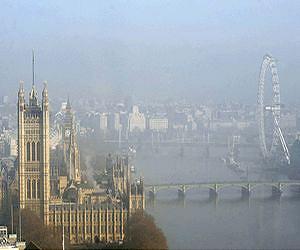
Air pollution remains high globally and urban areas are expanding, showing a more comprehensive effort is needed on the environmental front, the OECD said. "While there are signs of greening growth, most countries show progress on just one or two fronts and little on the others," OECD Environment Director Simon Upton said in a statement Tuesday. The Organization for Economic Cooperation and Development found half of its 35 member states have decoupled emissions from growth, meaning gains in carbon dioxide emissions no longer increase in tandem with gross domestic product. Few member states, however, have completely broken the link between growth, fossil fuel consumption and emissions. In a report published Tuesday, the OECD found less than 30 percent of member states meet some of the air quality standards set by the World Health Organization. Urban areas, meanwhile, continue to expand as globally; an area the size of Britain has been covered with buildings since 1990. "We need much greater efforts across the board if we are to safeguard natural assets, reduce our collective environmental footprint and sever the link between growth and environmental pressures," Upton said in a statement. The Group of 20 industrialized economies account for 85 percent of global GDP and 80 percent of the emissions of C02, a harmful greenhouse gas. In a May report, the OECD found the net impact of pro-climate policies for the G20 would be about 1 percent for GDP by 2021. According to OECD Secretary-General Angel Gurria, there is "no economic excuse" not to act on climate change initiatives. Speaking separately from Brussels, Miguel Arias Canete, the climate commissioner for the European Union, said renewable energy is at least competitive with some fossil fuel options, with wind capacity passing coal as a new EU energy source. Noting with regret a decision from the federal U.S. government to withdraw from the Paris climate treaty, Canete said the matter is not up for debate in Europe. "The agreement is ratified [and] fit for purpose," he said. "It is here to stay."
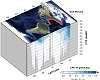 NASA-MIT Study Evaluates Efficiency of Oceans as Heat Sink, Atmospheric Gases Sponge
New York NY (SPX) Jun 20, 2017 The world's oceans are like brakes slowing down the full effects of greenhouse gas warming of the atmosphere. Over the last ten years, one-fourth of human-emissions of carbon dioxide as well as 90 percent of additional warming due to the greenhouse effect have been absorbed by the oceans. Acting like a massive sponge, the oceans pull from the atmosphere heat, carbon dioxide and other gases, such ... read more Related Links Climate Science News - Modeling, Mitigation Adaptation

|
|||||||||||||
| The content herein, unless otherwise known to be public domain, are Copyright 1995-2026 - SpaceDaily. All websites are published in Australia and are solely subject to Australian law and governed by Fair Use principals for news reporting and research purposes. By using our websites you consent to cookie based advertising. If you do not agree with this then you must stop using the websites from May 25, 2018. Privacy Statement. Additional information can be found here at About Us. |

 del.icio.us
 Digg
Digg Reddit
 Google






