| . |  |
. |
| . | |
. |


Novel Compounds Show Promise As Safer, More Potent Insecticides
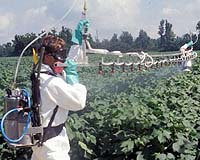
Victoria, Australia (SPX) Aug 30, 2005 Research teams at Nihon Nohyaku, Bayer CropScience and DuPont have developed two new classes of broad-spectrum insecticides that show promise as a safer and more effective way to fight pest insects that damage food crops. The insecticides, which represent the first synthetic compounds designed to activate a novel insecticide target called the ryanodine receptor, may also help tackle the growing problem of insecticide resistance, the researchers say. They described their studies today at the 230th national meeting of the American Chemical Society, the world's largest scientific society. Many of the most widely used insecticides today act on only a handful of exploited targets, including the organophosphates, which block acetylcholinesterase, an enzyme that helps control nerve activity. Some experts are concerned that these older, less-selective insecticides could pose heath risks and there's a growing effort underway to find safer replacements. Targeting the ryanodine receptor may offer a promising alternative, researchers say. Ryanodine, a natural alkaloid discovered years ago in a species of tropical plant, has been used to study muscle physiology in a wide variety of organisms, including insects and mammals. Ryanodine receptors regulate muscle and nerve activities by modifying levels of internal calcium in these cells. These receptors exist in both mammals and insects but have distinct differences. Researchers have known that ryanodine itself has insecticidal properties, but no synthetic molecules had previously been identified that potently and selectively target these receptors in insects, until now. Nihon Nohyaku Co., Ltd., based in Japan, and Bayer CropScience AG in Germany have jointly developed Flubendiamide, the first example of the phthalic acid diamides, a novel class of insecticides that activate the ryanodine receptor. The insecticide is highly effective against many different species of caterpillars, says Masanori Tohnishi, a senior research scientist at Nihon Nohyaku. In early tests, the compound showed high activity against the tobacco budworm (Heliothis virescens), which is known to cause serious damage to cotton, tobacco and other crops, the researchers say. The compound did not have any measurable effect on mammalian ryanodine receptors, according to Peter Lummen, Ph.D., a research scientist at Bayer CropScience. DuPont, based in Wilmington, Del., is developing another group of compounds that target the ryanodine receptor. Called anthranilic diamides, these novel compounds show excellent control of pest insects with exceptional mammalian safety, according to the researchers. They were the first to demonstrate the mode of action of these ryanodine receptor-active molecules, says Daniel Cordova, a researcher at DuPont Crop Protection. Both classes of compounds have high potency, the researchers say, although they are structurally different. Both insecticides are still in developmental stages. The research team at DuPont says they have cloned ryanodine receptors from several insect species and that these receptors may help provide a better understanding of their role in calcium signaling, which could lead to new insights into human diseases. Related LinksSpaceDaily Search SpaceDaily Subscribe To SpaceDaily Express
 Agriculture Reviving In Aceh After Tsunami: Scientists
 Paris (AFP) Aug 24, 2005
Fears that the most fertile agricultural land in the Indonesian province of Aceh has been wrecked by seawater that swept inland from the December 26 tsunami are unfounded, scientists say. |
|
|

| The content herein, unless otherwise known to be public domain, are Copyright 1995-2006 - SpaceDaily.AFP and UPI Wire Stories are copyright Agence France-Presse and United Press International. ESA PortalReports are copyright European Space Agency. All NASA sourced material is public domain. Additionalcopyrights may apply in whole or part to other bona fide parties. Advertising does not imply endorsement,agreement or approval of any opinions, statements or information provided by SpaceDaily on any Web page published or hosted by SpaceDaily. Privacy Statement |