| . |  |
. |
| . | |
. |


No Confidence In Organic
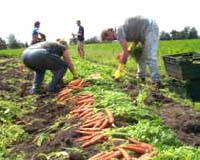
UPI Food Writer Le Bugue, France (UPI) Aug 09, 2006 When it comes to food labeled "Organic," what you read is not necessarily what you get. This is the shocking discovery exposed by the Dallas Morning News after its investigative reporter began poking into the reliability of the USDA's various organic labels. Eat To Live reported in April that the Cornucopia Institute of Wisconsin, a non-profit agricultural policy research group, found after a yearlong survey that the organic seal on some milk was not a guarantee that dairies had followed full organic practices. Now the Texas daily newspaper has found that the same applies to organic produce in general. Its report reveals that "the U.S. Department of Agriculture does not know how often organic rules" -- which came into force in October 2002 -- "are broken and has not consistently taken action when potential violations were pointed out." The job of assessing a food's worthiness of an organic label is allocated, in the United States, to 56 private or state-run certifiers, chosen by the farms and processing plants themselves. There are 40 more of the same in countries overseas. The USDA executive in charge of the National Organic Program, Barbara Robinson, explained to the paper that it's a struggle, with only eight or nine people on her staff, to keep up with "the booming industry." The label, she said, was as good as the people who are growing and monitoring the products. The 66 percent (and growing) of consumers in the United States who occasionally spend extra on organics either for the health of their families or the health and comfort of the animals cannot be assured by this revelation that the products they are buying are free of most hormones, antibiotics, fertilizers, chemical pest killers and genetic engineering as an organic label promises. The USDA does not apparently know exactly how frequently organic rules are broken. When infractions are revealed, they don't always take action, although last week the department did revoke the accreditation of the American Food Safety Institute International of Wisconsin for "seven serious violations of the National Organic Program standards." If American organic labels cannot be relied upon, what about those from foreign countries? About 40 percent of organic produce and products comes from overseas, including 300 operations in China, where human waste is a not uncommon fertilizer. The nation is a major supplier to Wal-Mart. About 200 Chinese farms and producers have been given USDA Organic certificates by the Organic Crop Improvement Association of Lincoln, Neb. Its executive director, Jeff See, said his company has built trust with its producers since it started in China more than 12 years ago, the newspaper reported. In the view of Fred Gale, a senior USDA economist with a background of research into Chinese agriculture, it was "almost impossible to grow truly organic food in China." He told the Dallas Morning News, "The water everywhere is polluted, and the soil is contaminated from industry and mining, and the air is bad." Yet China claims to have 8.6 million acres of organic farmland against the 2.2 million in the United States. With organic foods a rapidly expanding market, there has to be an investment in extra USDA personnel who can properly track and evaluate supplies. Rules for the definition of "organic" and the treatment of organic animals must be clear and unequivocal, and there should be a firm and immediate response to violations. Otherwise labels are valueless. If consumers begin to suspect that in buying organics they are paying more while getting less than is promised, it will be to the detriment of scrupulous organic producers who are following the rules to the letter.
Source: United Press International Related Links Cornucopia Institute of Wisconsin
 New Flood-Tolerant Rice Offers Relief For Poorest Farmers
 Los Banos, Philippines (SPX) Aug 16, 2006
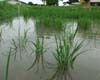
A gene that enables rice to survive complete submergence has been identified by a team of researchers at the International Rice Research Institute (IRRI) in the Philippines and at the University of California's Davis and Riverside campuses. |
|
|

| The content herein, unless otherwise known to be public domain, are Copyright 1995-2006 - SpaceDaily.AFP and UPI Wire Stories are copyright Agence France-Presse and United Press International. ESA PortalReports are copyright European Space Agency. All NASA sourced material is public domain. Additionalcopyrights may apply in whole or part to other bona fide parties. Advertising does not imply endorsement,agreement or approval of any opinions, statements or information provided by SpaceDaily on any Web page published or hosted by SpaceDaily. Privacy Statement |