| . |  |
. |
| . | |
. |


 by Staff Writers Washington DC (SPX) May 20, 2019
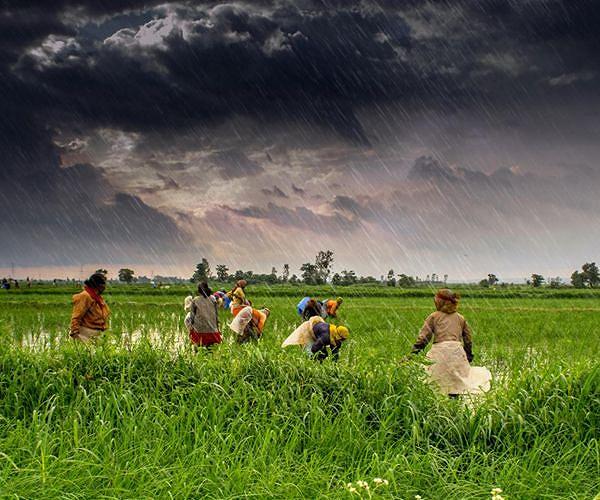
Rainfall from the Asian summer monsoon has been decreasing over the past 80 years, a decline unprecedented in the last 448 years, according to a new study. The new research used tree ring records to reconstruct the Asian summer monsoon back to 1566. The study, published in the AGU journal Geophysical Research Letters, found the monsoon has been weakening since the 1940s, resulting in regional droughts and hardships. The new research finds man-made atmospheric pollutants are likely the reason for the decline. The 80-year decline in the monsoon coincides with the ongoing boom in industrial development and aerosol emissions in China and the northern hemisphere that began around the end of World War II, according to the study's authors. Previous studies have looked at tree ring chronologies from this region but the new study, "surpasses [previous dendrochronology studies] in terms of the timespan covered and the number of trees involved," said Steve Leavitt, a dendrochronologist at the University of Arizona in Tucson and a co-author of the new study. "We were able to gather nearly 450 years worth of tree ring data with clear annual resolution from an area where tree ring growth correlates very strongly with rainfall." Nearly half of the world's population is affected by the Asian summer monsoon, which dumps the majority of the continent's rainfall in a few short, torrential months. Summer rainfall has been declining in recent decades, influencing water availability, ecosystems and agriculture from India to Siberia. Instrumental and observational records of monsoon strength and annual precipitation only go back about a hundred years. Long-term paleoclimate records are needed to help determine whether this decline is due to anthropogenic factors such as aerosol pollution or natural variation in the monsoon cycle.
Trees record hard times "One of the primary advantages of using tree rings to study precipitation is the annual resolution and the exact dating," Leavitt said. The tree rings captured drought periods such as the one that struck in 1928 and 1929 that led to widespread famine where more than 500,000 people died in China alone. The findings were also cross-checked with Chinese historical records of locust plagues, which tend to occur in drought years, as well as previously published tree ring chronologies. The new study found that the 80-year declining rainfall trend is unprecedented in the last 450 years, with more thin growth rings in the last 80 years than any other period. Prior to the 1940s, drought periods tended to be intermittent and shorter in duration with no other decades-long declines since 1566. Several factors are thought to affect the strength of the Asian Summer Monsoon, including solar variability, volcanic eruptions and anthropogenic aerosols. The study's authors used climate models to show sulfate aerosols - atmospheric pollutants that cause haze - are likely the dominant forcing agent controlling the decline of the Asian Summer Monsoon over the past 80 years. The study is an important data point in the ongoing quest to better understand the past and future of the global monsoon systems that deliver much of the world's precipitation, says Liviu Giosan, a paleoclimatologist at Woods Hole Oceanographic Institution in Massachusetts, who was not involved in the new study. "Monsoons are notoriously difficult to model and predict due to the high degree of regional variability," he said. "To learn more about the future, we need to better understand the past," Giosan said. "More of these kinds of studies that show [monsoon activity] over entire regions will help us better understand how the Asian Summer Monsoon functions as a whole, synoptically, over the entire continent."
Ocean activity is key controller of summer monsoons Cambridge MA (SPX) May 08, 2019 Results may help researchers interpret ancient monsoon variations, predict future activity in the face of climate change. Each summer, a climatic shift brings persistent wind and rain to much of Southeast Asia, in the form of a seasonal monsoon. The general cause of the monsoon is understood to be an increasing temperature difference between the warming land and the comparatively cool ocean. But for the most part, the strength and timing of the monsoon, on which millions of farmers depend each yea ... read more
|
|||||||||||||
| The content herein, unless otherwise known to be public domain, are Copyright 1995-2026 - SpaceDaily. All websites are published in Australia and are solely subject to Australian law and governed by Fair Use principals for news reporting and research purposes. By using our websites you consent to cookie based advertising. If you do not agree with this then you must stop using the websites from May 25, 2018. Privacy Statement. Additional information can be found here at About Us. |

 del.icio.us
 Digg
Digg Reddit
 Google







