| . |  |
. |
| . | |
. |


New Century Of Thirst For World's Mountains
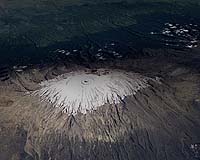
Richland WA (SPX) May 19, 2006 By the century's end, the Andes in South America will have less than half their current winter snowpack, mountain ranges in Europe and the U.S. West will have lost nearly half of their snow-bound water, and snow on New Zealand's picturesque snowcapped peaks will all but have vanished. Such is the dramatic forecast from a new, full-century model that offers detail its authors call "an unprecedented picture of climate change." The decline in winter snowpack means less spring and summer runoff from snowmelt. That translates to unprecedented pressure on people worldwide who depend on summertime melting of the winter snowpack for irrigation and drinking water. Hardest hit are mountains in temperate zones where temperatures remain freezing only at increasingly higher elevations, said Steven J. Ghan, staff scientist at the Department of Energy's Pacific Northwest National Laboratory and lead author of a study describing the model in the current Journal of Climate. PNNL scientist Timothy Shippert was co-author. Alaska in 2100 will maintain but 64 percent of its year 2000 snowpack. In Europe, the Alps will be at 61 percent and Scandinavia 56 percent. The Sierras, Cascades and southern Rockies will be at 57 percent of current levels. The Andes will drop to 45. And Mt. Cook and its snowcapped neighbors in New Zealand will be much less scenic at 16 percent of current. Ghan said the model, which actually simulated years 1977 to 2100 to use known data as calibration, differs from past attempts because it generates snow information for small areas � 5 kilometer grids, or about 3-miles � on mountains ranges over such a long period. "Global climate models have never been run at 5 kilometers resolution for a period covering more than a couple of months," Ghan said, "even on the biggest computers in the world." Ghan deployed a divide-and-conquer method to data crunching called "physically-based global downscaling" he and colleagues had used previously on mountains in the U.S. West. The world's mountain ranges are chopped into 10 different "elevation classes." For each elevation class, data such as air circulation, moisture and temperature is used to determine snowfall to the surface. The surface snow is then distributed across the grids according to the local surface elevation. The entire century-plus simulation, based on the National Center for Atmospheric Research Community Climate System Model funded by the National Science Foundation and DOE, can be run on a modest supercomputer over a few weeks. Ghan and Shippert used one at the PNNL-based W.R. Wiley Environmental Molecular Sciences Laboratory. Ghan cautioned about "significant limitations" to the model. For example, field observations in Africa suggest the famous snows of Mt. Kilimanjaro will be gone within decades, and on Greenland signs point to accelerated snow and ice melt. "This climate model doesn't show that," Ghan said. "That doesn't mean Kilimanjaro and Greenland aren't in trouble. But our model doesn't account for all of the snow loss that is possible. Our model neglects downward flow of snow by avalanches and snow slides, glacial creep in places where snowfall is heavy and the snow doesn't have time to melt." Related Links Pacific Northwest National Laboratory
 Three Gorges Dam: China's Great Wall on the Yangtze
 Yichang, China (AFP) May 18, 2006
 The Three Gorges Dam, which will reach completion Saturday, is China's Great Wall across the Yangtze River, a project that many expect to be a source of immense national pride for centuries. |
|
|

| The content herein, unless otherwise known to be public domain, are Copyright 1995-2006 - SpaceDaily.AFP and UPI Wire Stories are copyright Agence France-Presse and United Press International. ESA PortalReports are copyright European Space Agency. All NASA sourced material is public domain. Additionalcopyrights may apply in whole or part to other bona fide parties. Advertising does not imply endorsement,agreement or approval of any opinions, statements or information provided by SpaceDaily on any Web page published or hosted by SpaceDaily. Privacy Statement |