|
 |
 |
 |
 |
 |
 |
 |
 |
 |

| . |  |
. |
NASA Develops Wireless Tile Scanner For Space Shuttle Inspection
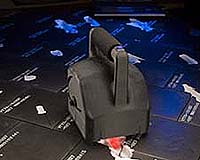
Moffett Field, CA (SPX) Aug 08, 2007 A new space shuttle tile inspection method using NASA-built, wireless scanners is replacing manual inspection. The new process begins with the upcoming shuttle mission, STS-118. Endeavour is scheduled to launch from NASA's Kennedy Space Center in Florida on Wednesday, Aug. 8 at 6:36 p.m. EDT. Technicians have been using six new scanners to look for cracks and other imperfections in some of the 24,000 tiles that cover space shuttle Endeavour. The agency designed and built the new tools at NASA's Ames Research Center in Moffett Field, Calif. In the past, workers at Kennedy visually analyzed tiles and measured dings and cracks with small hand-held scales. "The new method is much faster and more accurate because the depth and volume measurements of the flaws and their locations are wirelessly transmitted into a computer database," said Joe Lavelle, a senior engineer and project manager at Ames. "This tool allows the inspectors to determine with very high confidence whether a shuttle tile needs to be replaced or just repaired." "When they made the measurements manually with the scales, they had to estimate the volume of flaws to a worst-case value because they could not precisely measure the volume with any accuracy," Lavelle explained. "With this scanner, they will actually save tiles and the time-consuming process of replacing them." The thermal tiles on the space shuttle protect it from the extreme heat generated during re-entry into the Earth's atmosphere. After each shuttle lands, technicians go through a very rigorous and lengthy process to assess the surface of the tiles for any damage. Each scanner weighs approximately 2.9 pounds and is about the size and shape of a small teapot. Technicians place the machine on the tile's flaw to scan it. In about three seconds, the data are computerized and archived. Engineers can scrutinize computerized 3-D pictures of the flaws. The images show the length, width and depth of the flaws on the surface of the tiles. Although engineers designed the instrument to scan space shuttle tiles, it also could scan reinforced carbon-carbon material used on the leading edges of the shuttle's wings. Engineers developing a heat shield system for NASA's new spaceship Orion already are using a larger, desktop version of the scanner to study heat shield samples tested at Ames. NASA is building a second desktop scanner for use at NASA's Johnson Space Center in Houston. The unit should be completed in about two months. Community Email This Article Comment On This Article Related Links Shuttle at NASA Space Shuttle News at Space-Travel.Com
 Countdown Underway For Shuttle Flight
 Washington (AFP) Aug 06, 2007
NASA on Monday forecast a 70 percent chance of good weather for Wednesday's space shuttle launch, an event the US space agency hopes will help the public forget the recent stories of drunk and lovesick astronauts. The National Aeronautics and Space Agency started the countdown for the Endeavour shuttle Sunday at Cape Canaveral, Florida, at 8:00 pm (2400 GMT) Sunday toward liftoff scheduled for 6:36 pm (2236 GMT) on August 8. Jeff Spaulding, NASA Test Director, said there were no outstanding problems that might stall the flight. |
|
|

| The content herein, unless otherwise known to be public domain, are Copyright 1995-2007 - SpaceDaily.AFP and UPI Wire Stories are copyright Agence France-Presse and United Press International. ESA Portal Reports are copyright European Space Agency. All NASA sourced material is public domain. Additional copyrights may apply in whole or part to other bona fide parties. Advertising does not imply endorsement,agreement or approval of any opinions, statements or information provided by SpaceDaily on any Web page published or hosted by SpaceDaily. Privacy Statement |