| . |  |
. |
| . | |
. |


 by Paul Brinkmann Washington DC (UPI) Mar 06, 2020
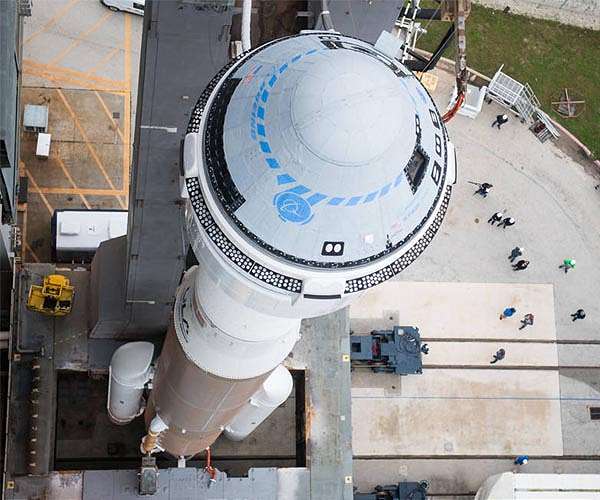
Boeing's software team had too much influence over final decisions regarding the company's Starliner capsule, a top NASA administrator said Friday. The finding was among 61 corrective actions NASA and Boeing have agreed to make before moving ahead with another Starliner mission. A test flight in December failed to reach the International Space Station, but landed successfully in New Mexico after two days in space. NASA has not decided if it will require another test flight before sending astronauts aloft. "We had delegated too much authority to the software board to approve changes and to approve actions as it applied to software," said Douglas Loverro, NASA's associate administrator for human exploration. "Those changes should have been brought up to the overall engineering review board." For example, software experts made a decision not to test all possible ways the software could respond to a given condition, Loverro said. He also said Friday he had decided to formally classify the Boeing flight failure as a "high visibility close call," the lowest category NASA uses for serious mission problems. Boeing and SpaceX are competing to become the first private company to fly astronauts on NASA missions. Boeing previously revealed that it had failed to detect problems with the capsule mission clock because it hadn't run full-length mission tests from launch to docking at the space station. The Starliner problems come as Boeing struggles to overcome serious safety issues with its Boeing 737 Max aircraft. Jim Chilton, senior vice president at Boeing Space and Launch, said he wasn't aware of any issues in common between Starliner and 737 Max. However, Chilton added that the lessons learned from Starliner "are being applied across our enterprise."
Xplore selects Orbit Fab's RAFTI design standard for deep space missions Seattle WA (SPX) Mar 06, 2020 Xplore Inc have announced that they are integrating the Orbit Fab RAFTI into the Xcraft, Xplore's highly-capable, multi-mission ESPA-class spacecraft. The RAFTI, which stands for Rapidly Attachable Fluid Transfer Interface, allows for reliable propellant transfers in the harshest space environments. It is ideal for mission destinations in any orbit, and thus aligns with Xplore's ability to fly missions at destinations from Earth to the Moon, Mars, Venus, LaGrange points, Near-Earth Asteroids (NEAs ... read more
|
|||||||||||||
| The content herein, unless otherwise known to be public domain, are Copyright 1995-2026 - SpaceDaily. All websites are published in Australia and are solely subject to Australian law and governed by Fair Use principals for news reporting and research purposes. By using our websites you consent to cookie based advertising. If you do not agree with this then you must stop using the websites from May 25, 2018. Privacy Statement. Additional information can be found here at About Us. |

 del.icio.us
 Digg
Digg Reddit
 Google






