| . |  |
. |
| . | |
. |


 by Staff Writers Pasadena CA (JPL) May 17, 2017
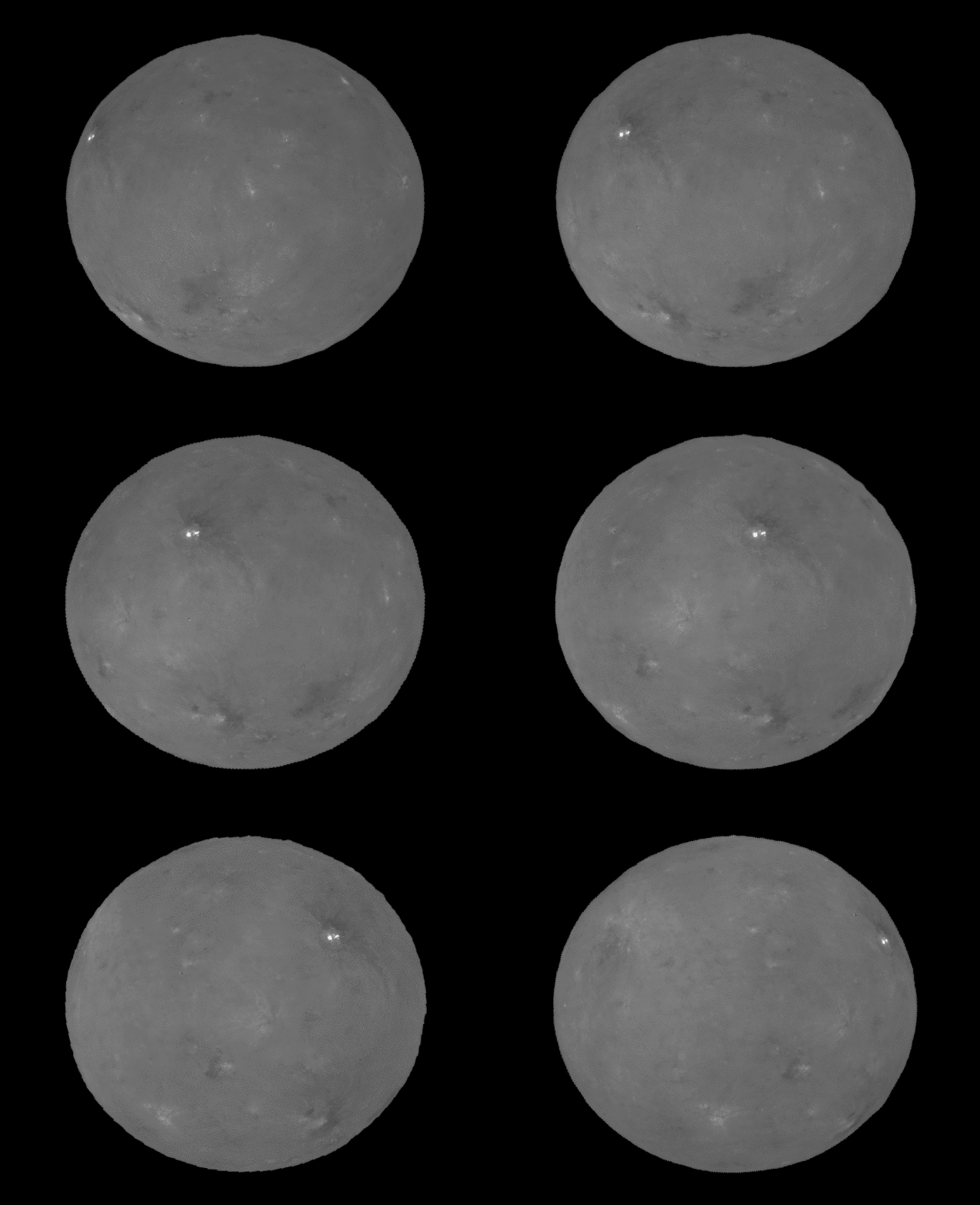
NASA's Dawn spacecraft successfully observed Ceres at opposition on April 29, taking images from a position exactly between the sun and Ceres' surface. Mission specialists had carefully maneuvered Dawn into a special orbit so that the spacecraft could view Occator Crater, which contains the brightest area of Ceres, from this new perspective. A new movie shows these opposition images, with contrast enhanced to highlight brightness differences. The bright spots of Occator stand out particularly well on an otherwise relatively bland surface. Dawn took these images from an altitude of about 12,000 miles (20,000 kilometers). Based on data from ground-based telescopes and spacecraft that previously viewed planetary bodies at opposition, scientists correctly predicted that Ceres would appear brighter from this opposition configuration. This increase in brightness, or "surge," relates the size of the grains of material on the surface, as well as the porosity of those materials. The science motivation for performing these observations is further explained in the March issue of the Dawn Journal blog. Dawn's observations of Ceres during its more than two years there cover a broader range of illumination angles than almost any body in the solar system. This provides scientists with an opportunity to gain new insights into the surface properties. They are currently analyzing the new data. The new observations and images were largely unaffected by the loss of function of Dawn's third reaction wheel. The spacecraft is healthy and orients itself using its hydrazine thrusters.
 Dawn Observing Ceres; 3rd Reaction Wheel Malfunctions
Pasadena CA (JPL) Apr 27, 2017 NASA's Dawn spacecraft is preparing to observe Ceres on April 29 from an "opposition" position, directly between the dwarf planet's mysterious Occator Crater and the sun. This unique geometry may yield new insights about the bright material in the center of the crater. While preparing for this observation, one of Dawn's two remaining reaction wheels stopped functioning on April 23. By elec ... read more Related Links Dawn at JPL Asteroid and Comet Mission News, Science and Technology

|
|||||||||||||
| The content herein, unless otherwise known to be public domain, are Copyright 1995-2026 - SpaceDaily. All websites are published in Australia and are solely subject to Australian law and governed by Fair Use principals for news reporting and research purposes. By using our websites you consent to cookie based advertising. If you do not agree with this then you must stop using the websites from May 25, 2018. Privacy Statement. Additional information can be found here at About Us. |


 del.icio.us
 Digg
Digg Reddit
 Google