|
 |
 |
 |
 |
 |
 |
 |
 |
 |

| . |  |
. |
Knocking on Heaven's Door
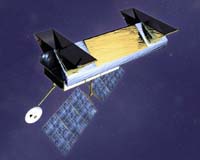
Pasadena CA (JPL) Aug 12, 2004 The Milky Way is a vast, diverse neighborhood. If you're hoping to find Earthlike planets that may harbor life, you'll need to narrow the search. Stars are a good place to start, because the dusty discs around stars spawn young planets. Are stars of certain ages or in certain locations more likely to include planets like Earth within their realms? Should we look at binary stars? The Extrasolar Planet Interferometric Survey, a project of NASA's Space Interferometry Mission (SIM) will launch in 2009 to look closely at about one hundred nearby stars and more broadly at several thousand distant stars to see if they have planets - especially Earthlike ones - among them. "The result will be an inventory of planetary systems in different environments," said the survey's principal investigator, Dr. Michael Shao of NASA's Jet Propulsion Laboratory in Pasadena, Calif. The survey will rely on the SIM's ability to precisely measure the positions and distances of stars outside our Solar System. It will also indirectly detect planets orbiting distant stars by measuring the change in a star's position. This "astrometric wobble" is caused by the gravitational pull of an orbiting planet. The SIM will help to determine which of these faraway planets might be similar to Earth in mass and temperature. The survey will first make multiple observations of about 100 nearby stars. Since another SIM team led by the University of California in Berkeley will also scrutinize nearby stars in a different study, the two sets of researchers held a "draft pick" of the closest 200 stars. "It turned out that we had slightly different criteria," Shao said. "Our team slightly favors luminous stars, because we're interested in stars where - if there were Earthlike planets in the habitable zone - they would be easiest to detect." Earth occupies the habitable zone in relation to the Sun - close enough to be warm, but not so far away that it is cold. "More luminous stars have a habitable zone further away from the star, resulting in a larger astrometric wobble," he said. Next, Shao's team will observe more than 2,000 stars of varying types, ages and locations. Some are in the Milky Way's spiral arms, between the arms, and outside the galaxy's disc. "We want to know what types of stars are likely to produce planets, no planets, or multiple planet systems," Shao said. The survey team will use the SIM's ability to study planets' orbits, as well. "Multiple planet systems can get tricky. When you have two big Jupiter-like planets and they're not in the right orbit, they could perturb each other so much that one gets thrown out of the Solar System. It can be a violent system for millions of years. We want to be able to figure out where orbits are stable," Shao said. The shape of a planet's orbit is also important. Most planets outside our Solar System travel in elliptical orbits - sometimes close to their sun, other times far from their sun, causing extremes in temperature. Planets with circular orbits, like those in our Solar System, are more uniform in temperature and therefore more conducive to life. Shao's survey will pave the way for the Terrestrial Planet Finder Mission, which will directly observe planets outside of our Solar System for the first time. The mission is planned for a 2014 launch. "We'll help create a target list for the Terrestrial Planet Finder in its quest to find habitable planets," Shao said. "We'll be able to suggest where to look, and because we'll be able to determine a planet's orbit, we'll know also know when to look - when the planet will be most detectable." Related Links More at Planet Quest SpaceDaily Search SpaceDaily Subscribe To SpaceDaily Express
 Eavesdropping On Olympus- Let The Games Begin
 Moffett Field CA (SPX) Jul 23, 2004
As the world prepares for the 2004 Olympics in Athens, one can ask the question: Are we on Earth the only ones who will watch the games? |
|
|

| The content herein, unless otherwise known to be public domain, are Copyright 1995-2006 - SpaceDaily.AFP and UPI Wire Stories are copyright Agence France-Presse and United Press International. ESA PortalReports are copyright European Space Agency. All NASA sourced material is public domain. Additionalcopyrights may apply in whole or part to other bona fide parties. Advertising does not imply endorsement,agreement or approval of any opinions, statements or information provided by SpaceDaily on any Web page published or hosted by SpaceDaily. Privacy Statement |