| . |  |
. |
| . | |
. |


Internet Satellite Operations Open To Hijacking
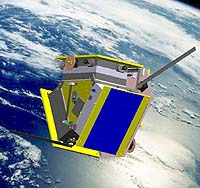
London - July 6, 2000 - In a week when NASA revealed that a computer hacker interrupted communications on a space shuttle mission in 1997, a new space research project has been launched which could give hackers the ultimate kick: control of a spacecraft. Surrey Satellite Technology, a space science company based in Guildford, has been commissioned by NASA to investigate how satellites can be controlled using cheap Internet technology. SST's SNAP-1 experimental satellite, launched last week from the Plesetsk Cosmodrome in Russia, may be the first satellite to test Internet control technology, says Chris Jackson, SST's ground station manager. But the idea of Web browsers being used to control spacecraft raises the spectre of hackers taking the controls. This week, NASA official Roberta Gross told BBC TV's Panorama programme that a malicious computer user struck as the shuttle docked with Mir in 1997. The hacker so overloaded NASA computers that transmission of data on astronauts' vital signs was "delayed". Fail-safes cut in and NASA says no harm was done. Most satellites communicate with Earth using expensive software that is custom-written for each mission. But using Internet protocols--in which data is sent and received in packets that are recognised by most computers--could make space-flight control much cheaper, Jackson says. The technology could also allow satellite operators to access spacecraft at any time, from any PC, anywhere. But opening up satellites to the Internet will make hacking into the system a real concern. NASA says that it has had 500 000 hacking attempts on its computers in the past year alone--but Jackson says the SST study will be addressing the security issues. This article appeared in the July 8 issue of New Scientist New Scientist. Copyright 2000 - All rights reserved. The material on this page is provided by New Scientist and may not be published, broadcast, rewritten or redistributed without written authorization from New Scientist. Related Links
 Be A Part Of Space History
 Washington - July 6, 2000 -
 The history offices at NASA Headquarters and Johnson Space Center are coordinating an effort to create searchable Adobe Acrobat PDF scans of every U.S. human spaceflight transcript produced by NASA, and volunteers are being sought to assist with proofing thousands of pages. |
|
|

| The content herein, unless otherwise known to be public domain, are Copyright 1995-2006 - SpaceDaily.AFP and UPI Wire Stories are copyright Agence France-Presse and United Press International. ESA PortalReports are copyright European Space Agency. All NASA sourced material is public domain. Additionalcopyrights may apply in whole or part to other bona fide parties. Advertising does not imply endorsement,agreement or approval of any opinions, statements or information provided by SpaceDaily on any Web page published or hosted by SpaceDaily. Privacy Statement |