| . |  |
. |
| . | |
. |


India Says First Missile Intercept Test A Success
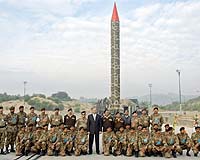
Bhubaneswar (AFP) India, Nov 27, 2006 India said Monday that its first test of a missile designed to intercept other missiles was a success, amid its ongoing efforts to develop a home-grown ballistic interception system. The test saw a surface-to-surface Prithvi-II (earth) missile shot down over the Bay of Bengal by a similar missile fired seconds later. The weapons were fired from the country's Chandipur-on-Sea and Wheeler Islands testing sites respectively, about 45 nautical miles (83 kilometres) apart, an officer with the Defence Research and Development Organisation, which conducted the test, said on condition of anonymity. The Prithvi-II missile, which is capable of carrying conventional or nuclear warheads, was last tested on November 19. It has a range of up to 250 kilometers (156 miles). Prior to the test, local authorities evacuated more than 2,700 people from the Chandipur-on-Sea launch site area as a precautionary measure in case a missile went off course. Wheeler Islands are an exclusive defence zone with no civilian population. The Prithvi missile is part of India's Integrated Guided Missile Development Program to build a missile arsenal ranging from nuclear-capable ballistic missiles to short-range weapons.
Source: Agence France-Presse Related Links Defence Research and Development Organisation Learn about missile defense at SpaceWar.com
 Aegis Missile Defense Fleet Tops 80 Ships
 Moorestown NJ (SPX) Nov 28, 2006
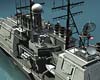
Lockheed Martin delivered the 100th Aegis Weapon System to the U.S. Navy during a ceremony in which Chief of Naval Operations Adm. Mike Mullen announced that the destroyer receiving the system will be named Wayne E. Meyer, after the retired rear admiral who is widely regarded as the "Father of Aegis." |
|
|

| The content herein, unless otherwise known to be public domain, are Copyright 1995-2006 - SpaceDaily.AFP and UPI Wire Stories are copyright Agence France-Presse and United Press International. ESA PortalReports are copyright European Space Agency. All NASA sourced material is public domain. Additionalcopyrights may apply in whole or part to other bona fide parties. Advertising does not imply endorsement,agreement or approval of any opinions, statements or information provided by SpaceDaily on any Web page published or hosted by SpaceDaily. Privacy Statement |