| . |  |
. |
| . | |
. |


Ice Melt May Dry Out US West Coast
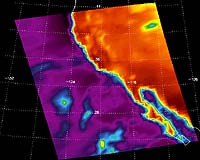
London - Apr 08, 2004 By mid century cities and towns along the American west coast could be suffering serious water shortages in response to climate change. As Arctic sea-ice melts, annual rainfall is forecast to drop by as much as 30 per cent from Seattle to Los Angeles, and inland as far as the Rocky Mountains reports New Scientist. Driving the change is the prediction that over the next 50 years annual Arctic sea ice could shrink by half in many areas of as much as 50 per cent in some areas during the summer. To find out what this would mean for climate, Jacob Sewall and Lisa Cirbus Sloan from the University of California at Santa Cruz first used a climate model to work out how sea ice cover was likely to change through the rest of the year. Then they took these values for sea ice cover and the resulting sea surface temperatures, and plugged those into a global climate model to see which areas of the world would be most affected. While Europe got off quite lightly, they found that the sea ice changes are likely to mean significantly fewer storms will pass over the west coast of the US. "Winter sea ice acts like an insulating lid," Sewall told New Scientist. "When the lid is reduced, more heat can escape from the ocean to warm the atmosphere." Towers of warm air form above areas where sea ice has been lost, and that disturbs the flow of air in the atmosphere around them, "like the supports under a bridge alter the flow of water in a river." In their model Sewall and Cirbus Sloan found that such towers formed between Norway and Greenland, deflecting winter storms that would otherwise have passed over the west coast of the US towards northern British Columbia and southern Alaska. These areas received 6 per cent more rain, while southern British Columbia down to southern California suffered a 30 per cent drop. The researchers will publish their results in a future issue of Geophysical Research Letters. "Given that water resources in this region are currently stretched close to their limit, a 30 per cent drop would have a serious impact," says Sewall. Water levels in reservoirs would probably drop, making water rationing a necessity. Meanwhile agriculture would suffer from a lack of water for irrigation and famous national parks, such as Yosemite in California, could change completely as natural ecosystems adapted to a drier climate. However, Sewall is careful to point out that so far they have only modelled the impact of reduced Arctic sea ice cover. Other climate factors, such as increasing greenhouse gases, might interact with melting Arctic sea ice, reducing, or even exacerbating, any changes in rainfall. The research "needs more work to become a prediction," agrees Marika Holland, a climate modeller at the National Center for Atmospheric Research in Boulder, Colorado. But she says the study "highlights the importance of regional changes associated with a distant location". Even though the changes in sea ice between Norway and Greenland were relatively small, they were enough to have a significant impact across the globe. This report is based on an article by Kate Ravilious that will appear in the April 10 edition of New Scientist. Related Links SpaceDaily Search SpaceDaily Subscribe To SpaceDaily Express
 Patagonian Ice Dam Studied From Space Cracks Open
 Paris - Mar 22, 2004
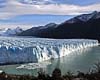
A spectacle unseen for 16 years occurred in Patagonia this week: a natural dam of blue ice gave way to crushing lake waters trapped behind it, finally breaking apart. |
|
|

| The content herein, unless otherwise known to be public domain, are Copyright 1995-2006 - SpaceDaily.AFP and UPI Wire Stories are copyright Agence France-Presse and United Press International. ESA PortalReports are copyright European Space Agency. All NASA sourced material is public domain. Additionalcopyrights may apply in whole or part to other bona fide parties. Advertising does not imply endorsement,agreement or approval of any opinions, statements or information provided by SpaceDaily on any Web page published or hosted by SpaceDaily. Privacy Statement |