| . |  |
. |
| . | |
. |


ISS Crew Watch Hurricanes Brew
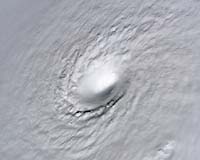
Houston TX (SPX) Oct 24, 2005 The 12th international space station crew turned its attention last week to experiment work aboard their microgravity home and laboratory. They also captured spectacular images of Hurricane Wilma and prepared for a spacewalk. Expedition 12 Commander Bill McArthur and Flight Engineer Valery Tokarev began reviewing procedures for the first station-based spacewalk using U.S. suits since 2003. During the November 7, five and one half hour spacewalk, they will install a new video camera on the far end of the station's P1 (port) truss. They also will remove a probe that measured the electrical potential around the station from the top of the P6 truss. Last Thursday, the station's atmosphere was repressurized with oxygen from storage tanks on the docked Progress supply ship. Russian specialists are preparing a troubleshooting plan for the Elektron, the primary oxygen generation system on the station. It stopped working late last week. Russian technical specialists are examining what caused the abort of a planned altitude reboost Tuesday using Progress fuel and thrusters. Mission managers believe Russian navigation computers properly shut down the thrusters when they lost information about how they were performing. A planned test firing of the thrusters Wednesday will gather more data for Russian engineers. McArthur checked out a system to analyze exhaled gases inside the station. The Pulmonary Function System took more than eight years of design, development and testing on Earth by U.S. and European Space Agency scientists. It was delivered to the station by the shuttle Discovery in July. McArthur and Tokarev conducted the first of three sessions with the Renal Stone experiment. They collected urine samples for return to Earth and logged all food and drink consumed during a 24-hour period. This ongoing experiment investigates whether potassium citrate can be used to reduce the risk of kidney stone formation for space travelers. The citrate minimizes kidney stone development on Earth. Since urine calcium levels are typically much higher in space, astronauts are susceptible to an increased risk of developing kidney stones. An understanding of the crew's diet during the urine collection timeframes will help researchers. They will determine if the excess calcium in the urine is due to diet or a response to the microgravity environment. The payload operations team at NASA's Marshall Space Flight Center coordinates U.S. science activities on the station. During their six-month mission, McArthur and Tokarev will conduct at least two spacewalks and oversee the arrival of the next Progress supply vehicle in December. They also will relocate their Soyuz spacecraft to free the Russian Pirs docking port for a later spacewalk. Pirs doubles as an airlock and docking module. Related Links ISS at NASA SpaceDaily Search SpaceDaily Subscribe To SpaceDaily Express
 Typhoon Kirogi Makes Stormy Entry
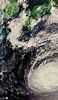 Paris, France (ESA) Oct 24, 2005
This Envisat acquisition showing Typhoon Kirogi passing beneath Japan is the latest of more than 480 satellite images so far available for viewing in ESA's new Earth Images Gallery. |
|
|

| The content herein, unless otherwise known to be public domain, are Copyright 1995-2006 - SpaceDaily.AFP and UPI Wire Stories are copyright Agence France-Presse and United Press International. ESA PortalReports are copyright European Space Agency. All NASA sourced material is public domain. Additionalcopyrights may apply in whole or part to other bona fide parties. Advertising does not imply endorsement,agreement or approval of any opinions, statements or information provided by SpaceDaily on any Web page published or hosted by SpaceDaily. Privacy Statement |